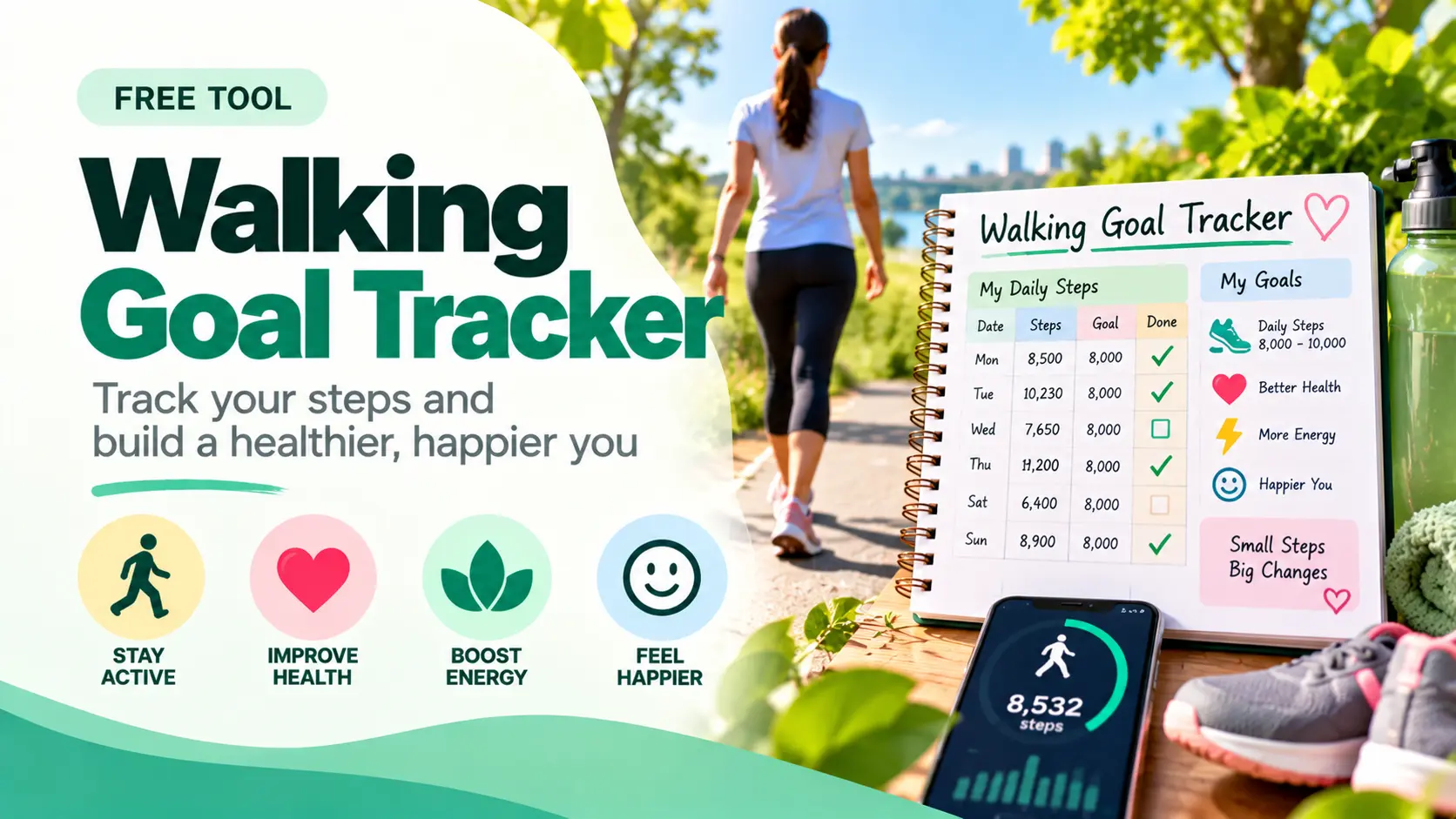
Walking Goal Tracker
Set a daily walking goal in minutes or steps, log each walk, and see how your week is going. Everything is saved on this device.
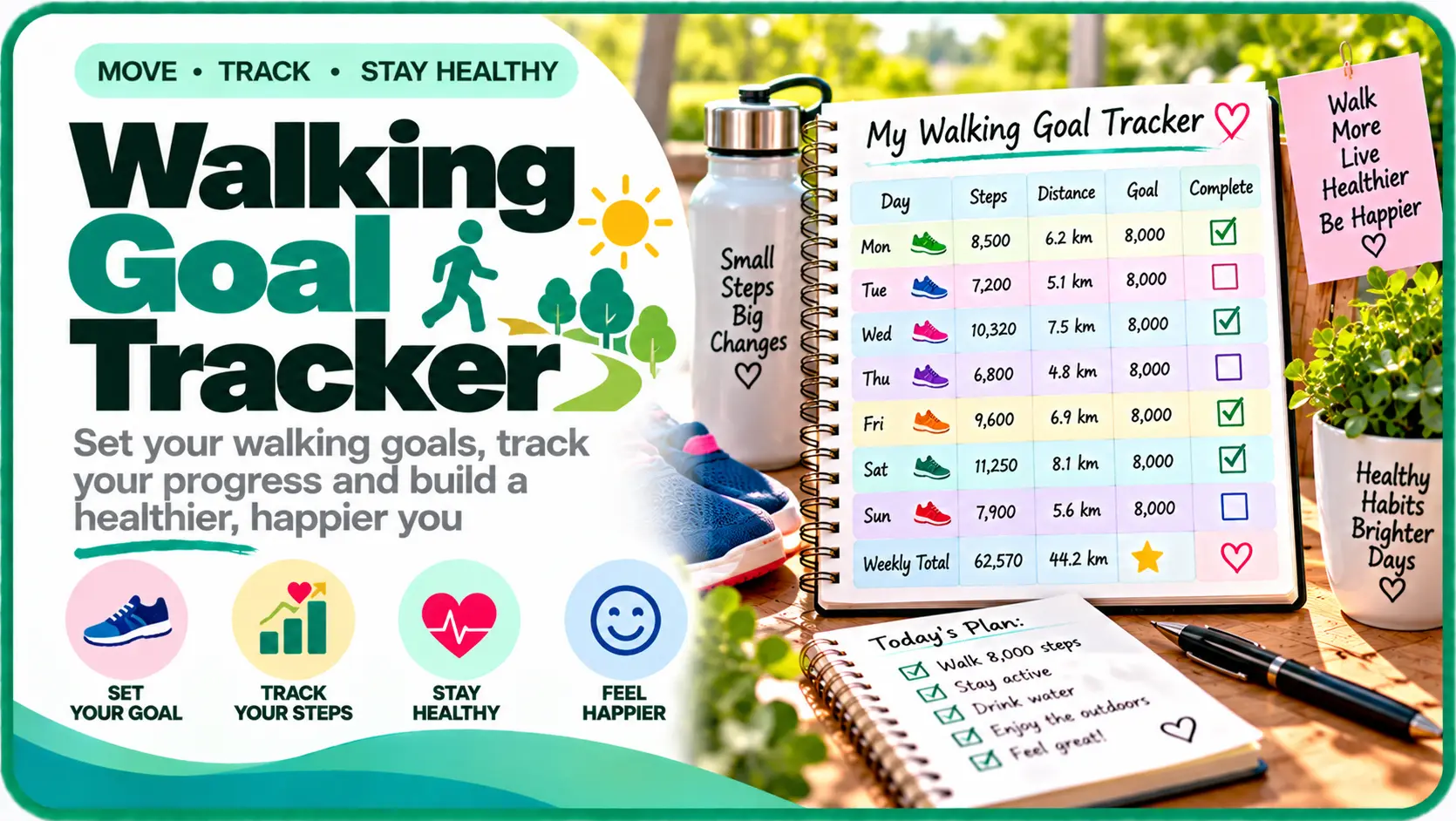
Step 1: Set your goal
Step 2: Log a walk
Today
0 of
This week (Mon–Sun)
General guidance, not medical advice. If you’re new to exercise, have a health condition, or feel pain, dizziness or chest discomfort when walking, check with a doctor first. Your entries stay in this browser and are never sent to us.
BetterYouCare · Weekly Walking Log
Daily goal: ______
| Day | Walk 1 | Walk 2 | Total | Goal met? |
|---|---|---|---|---|
| Mon | ||||
| Tue | ||||
| Wed | ||||
| Thu | ||||
| Fri | ||||
| Sat | ||||
| Sun |
General guidance, not medical advice. betteryoucare.com
How much walking is enough?
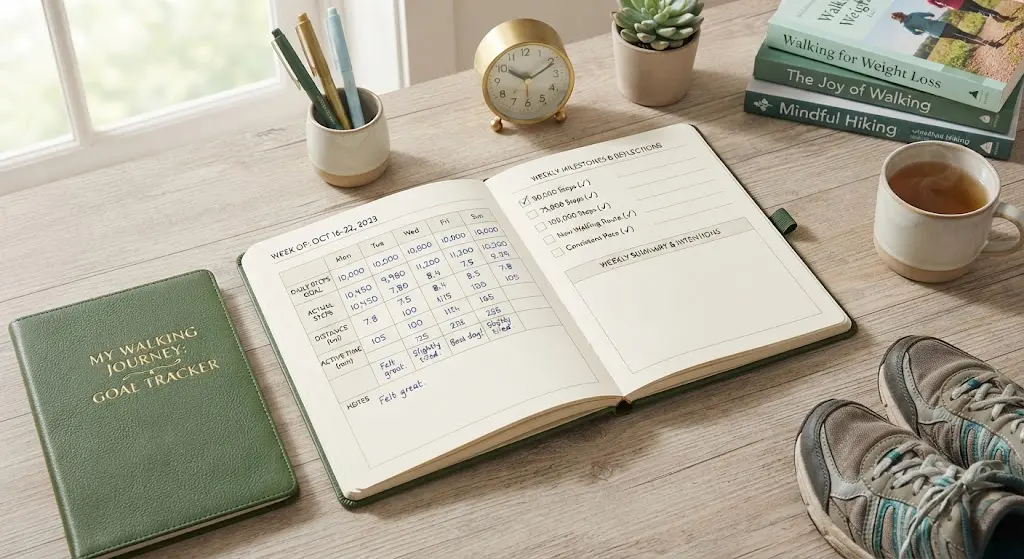
The CDC recommends that adults get at least 150 minutes of moderate-intensity activity a week, such as brisk walking. That works out to 30 minutes a day, 5 days a week, which is why this tracker starts with that goal. The CDC also recommends muscle-strengthening activities at least 2 days a week.
You don’t need to do it all at once. Shorter walks count too, so three 10-minute walks can add up to your 30 minutes. And if you’re starting from very little activity, remember the CDC’s point that some activity is better than none: start small and build up.
Minutes or steps?
The official guidelines are written in minutes, so minutes are the simplest way to check you’re meeting them. Steps are handy if you already carry a phone or wear a step counter. There’s no official daily step target, so if you track steps, pick a goal a little above what you usually do and raise it gradually.
Easy ways to walk more
- Take a 10-minute walk after lunch or dinner.
- Walk while you take phone calls.
- Get off the bus a stop early or park farther away.
- Pick a regular route and time, so it becomes part of your routine.
- Walk with a friend or family member to keep each other going.