How Much Water Should You Drink a Day?
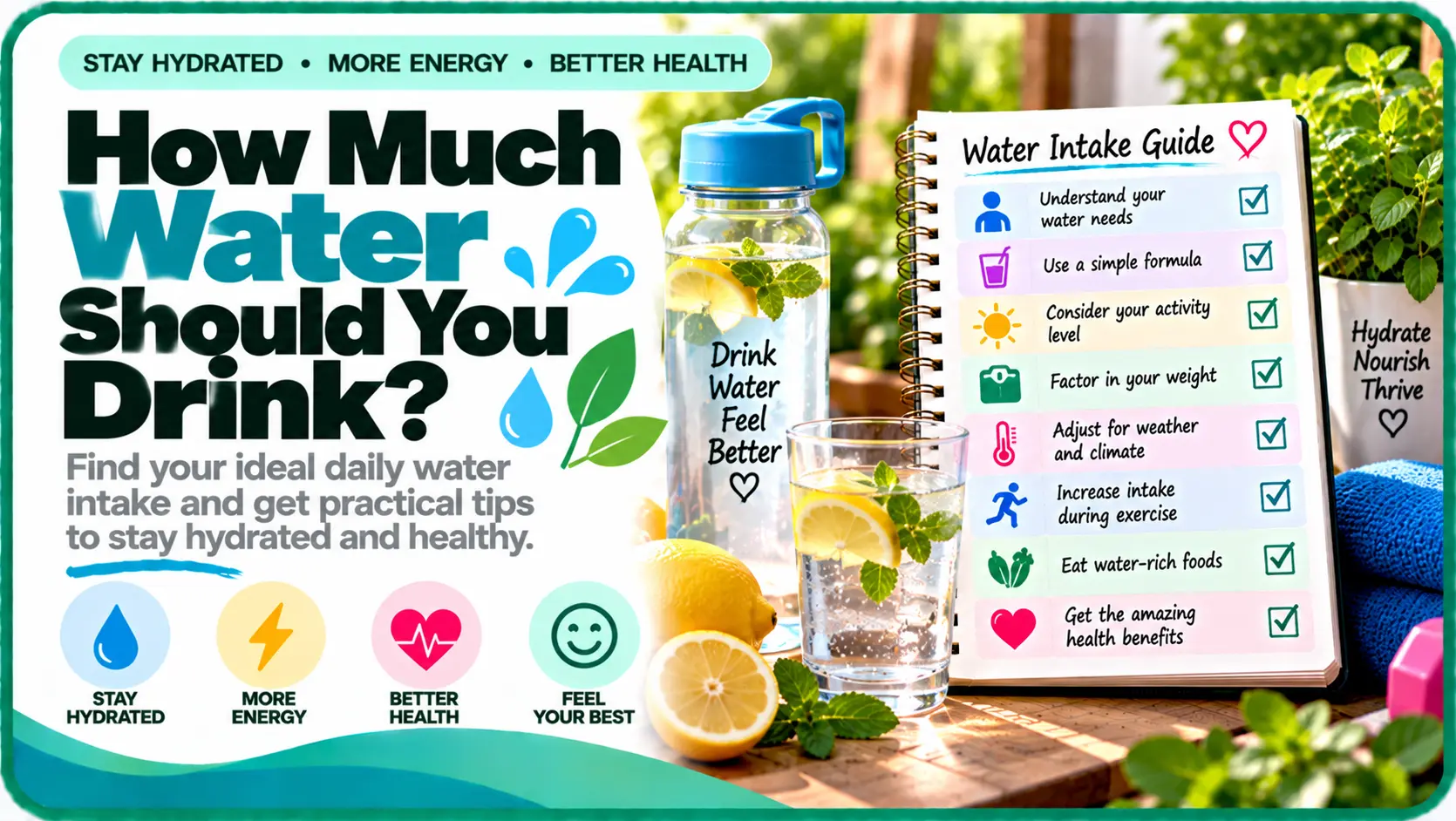
For most healthy adults, a good everyday target is around 6 to 8 glasses of fluid a day, or roughly 2 to 3 liters from drinks, with more on hot days and when you’re active. Here’s where those numbers come from, what counts, and how to tell if you’re drinking enough.
Key takeaways
- The NHS suggests 6 to 8 cups or glasses of fluid a day as a general guide.
- Total daily fluid recommendations are about 2.7 liters for women and 3.7 liters for men, but around 20% of that comes from food.
- Water, milk, tea and coffee all count. Keep fruit juice to one small glass a day.
- Rarely feeling thirsty and having pale yellow urine are good signs you’re drinking enough.
The short answer
There’s no single number that suits everyone, but two well-known guidelines give a useful range.
- The simple version: the NHS recommends aiming for 6 to 8 cups or glasses of fluid a day.
- The detailed version: according to Mayo Clinic, the U.S. National Academies suggest a total daily fluid intake of about 2.7 liters (11.5 cups) for women and 3.7 liters (15.5 cups) for men.
Those totals sound high, but they include water from food. Mayo Clinic notes that food provides about 20% of the water you need each day. Take that away and you’re left with roughly 2.2 liters a day from drinks for women and 3 liters for men: about 9 and 12 standard 250 ml glasses respectively.
| Guideline | Women | Men |
|---|---|---|
| Total fluid, including food (Mayo Clinic / U.S. National Academies) | 2.7 L | 3.7 L |
| Approximate amount from drinks (about 80% of the total) | 2.2 L | 3.0 L |
| Simple daily guide (NHS) | 6 to 8 cups or glasses | |
These are starting points for healthy adults, not exact targets. Your own needs depend on your size, activity, the weather and your health.
Get your own daily goal. Our free Water Intake Tracker adjusts for exercise and hot weather, then lets you tap once for every glass.
Open the Water Intake Tracker →When you need more
Both the NHS and Mayo Clinic say you may need more fluids when you:
- Exercise or are active for a long time: drink extra before, during and after activity to replace what you lose through sweat.
- Are in hot or humid weather: you sweat more, even when you’re not exercising.
- Are at high altitude: this also increases fluid loss, according to Mayo Clinic.
- Are unwell: fever, vomiting and diarrhea all cause your body to lose fluid.
- Are pregnant or breastfeeding: your needs go up. Ask your doctor or midwife what’s right for you.
The NHS says water is the best way to replace fluids lost through sweating or illness.
Some people need less, not more. If you have kidney, heart or liver disease, or your doctor has told you to limit fluids, follow their advice rather than general guidelines like these.
What counts as fluid
It’s not just plain water. The NHS says water, lower-fat milk and lower-sugar drinks, including tea and coffee, all count toward your daily intake.
| Drink | Counts? | Notes |
|---|---|---|
| Water | Yes | The best everyday choice; no calories or sugar |
| Tea and coffee | Yes | Go easy on added sugar, and on caffeine later in the day if it affects your sleep |
| Lower-fat milk | Yes | Also provides other nutrients |
| Fruit juice and smoothies | Yes, in small amounts | The NHS suggests no more than one small glass (150 ml) a day, with a meal, because they’re high in sugar |
| Sugary soft drinks | Yes, but limit | Higher in calories, and the sugar can damage your teeth |
| Water-rich foods | Yes | Watermelon, strawberries, cucumber, soups and similar foods add to your total |
How to tell if you’re drinking enough
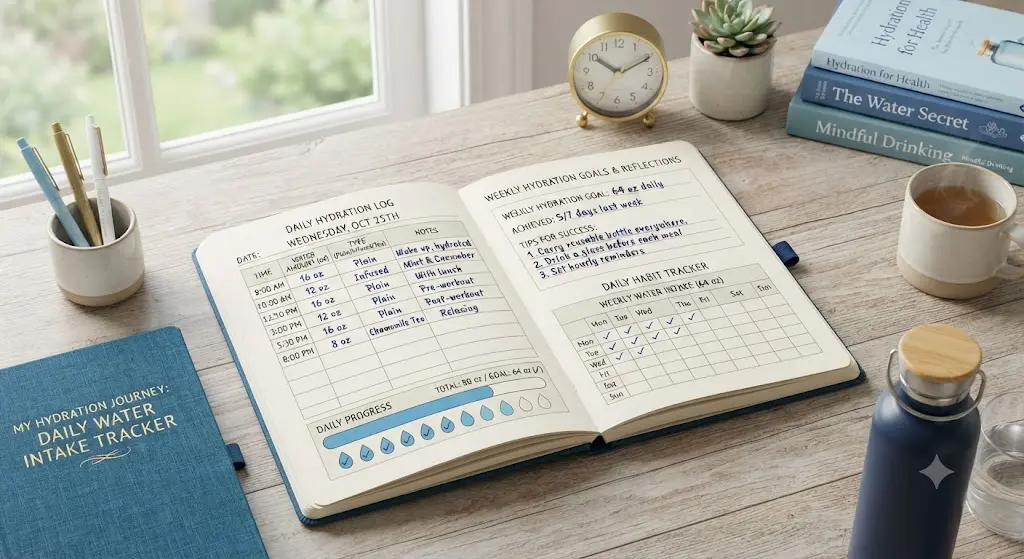
You don’t need to measure every sip. Mayo Clinic says your fluid intake is probably adequate if:
- you rarely feel thirsty, and
- your urine is colorless or light yellow.
Signs you may need more include feeling thirsty, a headache or light-headedness, dark yellow and strong-smelling urine, peeing less often than usual, tiredness, and a dry mouth, lips and tongue, according to the NHS.
When to get medical help: the NHS advises getting urgent advice if you feel unusually tired or drowsy, stay dizzy when you stand up, are peeing much less than normal, or have a fast heartbeat or fast breathing. Confusion, cold or blotchy skin, or difficulty breathing are emergencies, so call your local emergency number.
Why water matters
According to the CDC, water helps your body keep a normal temperature, lubricate and cushion your joints, protect your spinal cord and other sensitive tissues, and get rid of waste. The CDC also points out that water has no calories, so swapping sugary drinks for plain water is an easy way to cut down on sugar and calories.
Easy ways to drink more
- Start the day with a glass as soon as you wake up.
- Have a glass with every meal. Three meals already gets you to three glasses.
- Carry a reusable water bottle, as the CDC suggests, and refill it whenever you pass a tap.
- Add flavor naturally with a slice of lemon or lime.
- Choose water when eating out instead of a soft drink.
- Tie it to a habit: after you sit down at your desk, after each phone call, or whenever you make tea.
- Track it for a week to see your real pattern. The Water Intake Tracker shows your last seven days at a glance.
What 2 liters looks like in a day
Spread across the day, eight 250 ml glasses is less daunting than it sounds:
| When | Drink | Running total |
|---|---|---|
| On waking | Glass of water | 250 ml |
| Breakfast | Tea or coffee + glass of water | 750 ml |
| Mid-morning | Glass of water at your desk | 1 L |
| Lunch | Glass of water | 1.25 L |
| Afternoon | Glass of water or herbal tea | 1.5 L |
| Dinner | Glass of water | 1.75 L |
| Evening | Glass of water or milk | 2 L |
Common questions
How many glasses of water should I drink a day?
The NHS suggests 6 to 8 cups or glasses of fluid a day as a general guide. Many adults need a little more, up to about 9 to 12 standard glasses from drinks, especially if they’re active or it’s hot.
Do tea and coffee count toward my water intake?
Yes. The NHS says water, lower-fat milk and lower-sugar drinks, including tea and coffee, all count. Just watch the added sugar, and limit caffeine later in the day if it affects your sleep.
Is eight glasses a day a rule?
It’s a reasonable rule of thumb rather than a strict requirement. Mayo Clinic calls eight glasses a day a good goal, but individual needs vary with activity, weather and health.
What color should my urine be?
Colorless or light yellow usually means you’re drinking enough. Dark yellow, strong-smelling urine can be a sign you need more fluids.
Does food count toward my daily water?
Yes. Mayo Clinic says food provides about 20% of the water you need each day, especially fruit, vegetables and soups.
Sources
- Mayo Clinic: Water, how much should you drink every day?
- NHS: Water, drinks and your health
- NHS: Dehydration
- CDC: About water and healthier drinks
Related tools and guides
This guide is for general education and is not medical advice. See our Health Disclaimer and Editorial Policy.