Easy Ways to Move More at a Desk Job
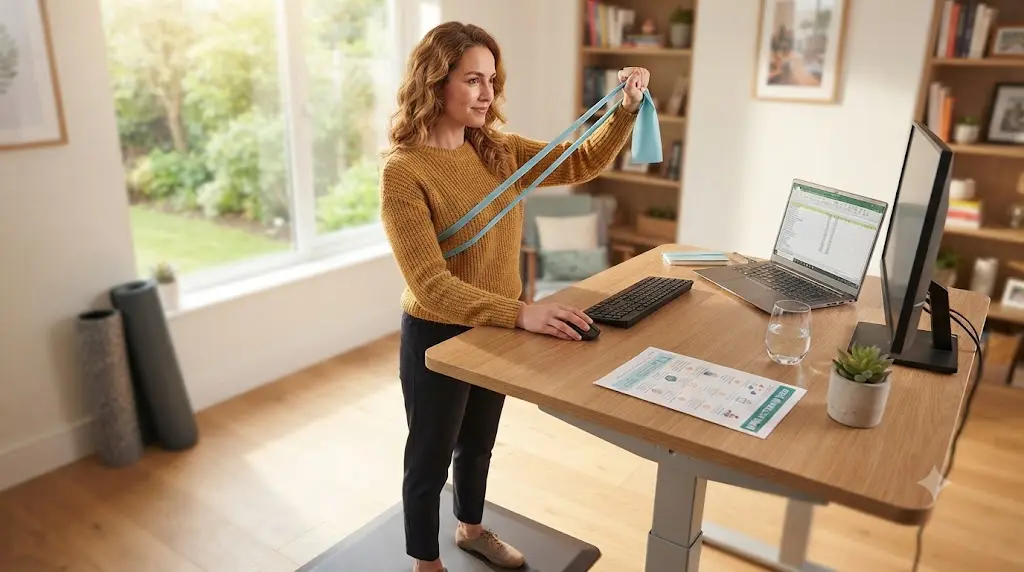
If you sit at a desk all day, you can meet your weekly exercise target and still spend most of your waking hours sitting. The answer isn’t a gym membership; it’s small bits of movement spread through the day. Here are simple ideas for before, during and after work.
Key takeaways
- Health guidelines say to reduce sitting time and break up long periods of not moving.
- Being active for 150 minutes a week doesn’t cancel out sitting all day; both matter.
- Short movement breaks count. Any activity is better than none.
- Build movement into things you already do: calls, lunch, your commute.
Why sitting all day matters
The NHS links too much sitting with a higher risk of heart disease, stroke, type 2 diabetes and weight gain. It makes an important point: you can hit your weekly activity target but still be at risk if you spend the rest of your time sitting or lying down.
That’s why the NHS guidelines for adults include two separate goals: be active (150 minutes of moderate activity a week), and reduce time spent sitting and break up long periods of not moving with some activity. The World Health Organization says the same: all adults should limit the time they spend sedentary, and any amount of physical activity is better than none.
The good news is that breaking up sitting doesn’t take much: a few minutes of standing or walking, several times a day.
At your desk
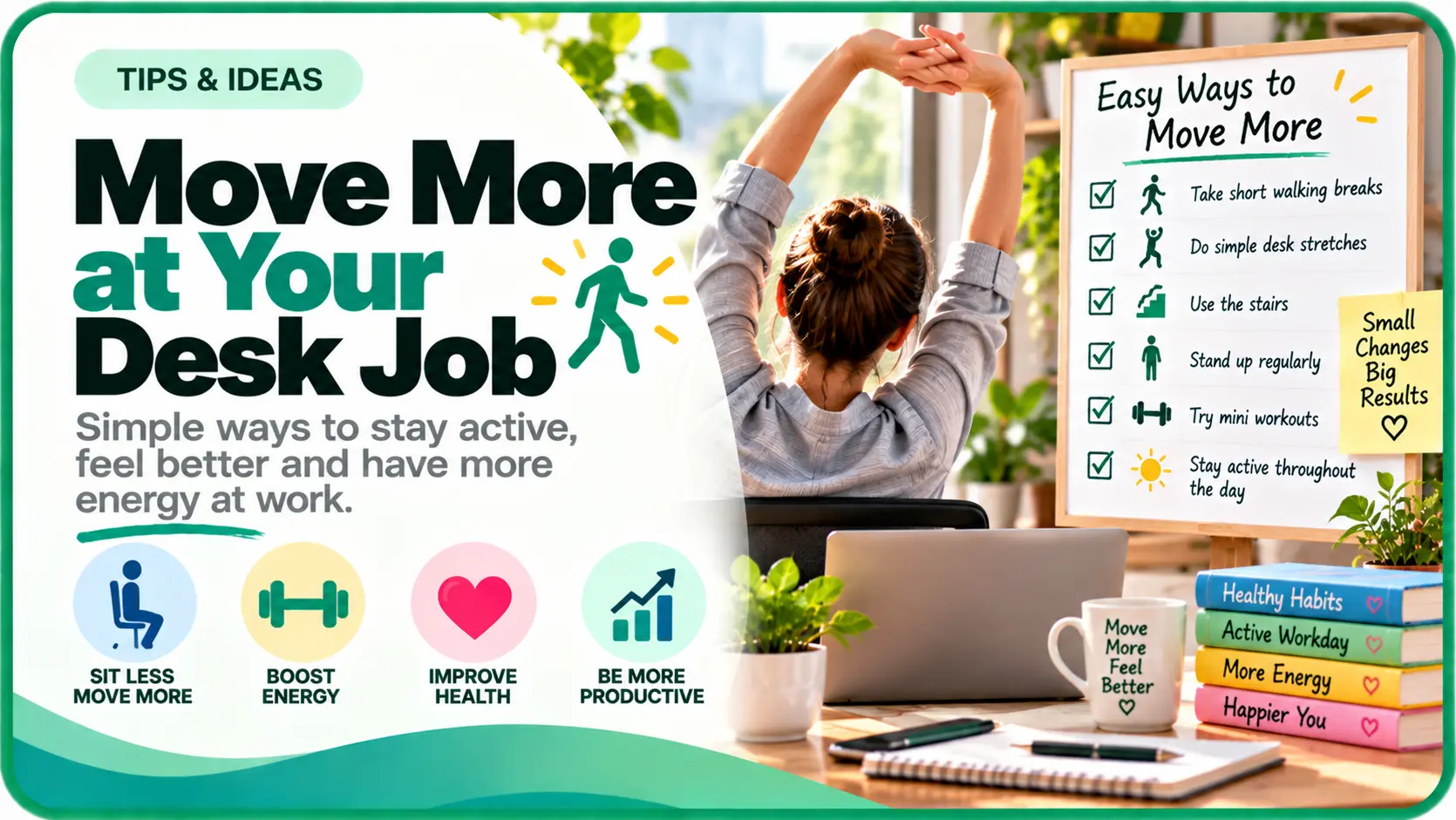
- Stand up every 30 to 60 minutes. Set a gentle reminder on your phone or computer, or use the end of each task as your cue.
- Stand for phone and video calls where you can, or walk during calls that don’t need a screen.
- Walk to a colleague instead of sending a message.
- Use a water bottle as a timer. Refilling it means getting up, and helps you drink enough.
- Try a standing or walking meeting for short catch-ups.
- Stretch in your chair: shoulder rolls, neck stretches, ankle circles and a seated twist.
- Use the stairs instead of the lift, for at least a floor or two.
Five simple desk stretches
These take about two minutes in total. Move slowly, breathe normally, and stop if anything hurts.
- Shoulder rolls: roll your shoulders up, back and down 10 times.
- Neck stretch: gently tilt your ear toward one shoulder, hold for 10 seconds, then switch sides.
- Seated twist: sit tall, turn your upper body to one side using the back of the chair, hold for 10 seconds, then switch.
- Wrist and finger stretch: stretch one arm forward, palm up, and gently pull your fingers back with the other hand for 10 seconds; switch hands.
- Stand and reach: stand up, reach both arms overhead, then lower them slowly. Repeat 5 times.
On your breaks
- Take a 10-minute walk after lunch. The NHS says even a brisk 10-minute daily walk has health benefits and counts toward your 150 minutes.
- Eat lunch away from your desk. It gets you up and gives your eyes a rest from the screen.
- Take the long way to the kitchen, bathroom or printer.
- Step outside for a few minutes of daylight and fresh air.
Before and after work
- Walk or cycle part of your commute. Get off the bus or train a stop early, or park farther away.
- Stand on public transport when it’s safe to do so.
- Walk after dinner. A short evening walk is an easy habit to build.
- Limit evening sitting. The NHS lists watching TV and using a computer as common sedentary habits; stand up or move during ad breaks or between episodes.
See your movement add up. Log short walks in our free Walking Goal Tracker and watch your week build toward 150 minutes.
Open the Walking Goal Tracker →Working from home
Remote work removes the commute, the walk to the bus and the trip to a colleague’s desk, so you may move even less. A few fixes:
- Fake commute: a 10-minute walk before you start and after you finish work.
- Work from different spots: stand at the kitchen counter for some tasks.
- Do one small chore between meetings: hang laundry, water plants, wash a few dishes.
- Keep your printer or water across the room rather than within reach.
A sample workday
| When | Movement | Time |
|---|---|---|
| Commute | Walk from a farther stop or parking spot | 10 min |
| Mid-morning | Stand, refill water, stretch | 3 min |
| Calls | Stand or walk during one call | 10 min |
| Lunch | Brisk walk outside | 10 min |
| Afternoon | Stairs, walk to a colleague, stretch | 5 min |
| Evening | Walk after dinner | 15 min |
That’s over 50 minutes of movement without a single workout, and it breaks up your sitting time throughout the day.
Back, neck or joint pain? A comfortable chair, a screen at eye level and regular breaks help many people. If pain continues or gets worse, see a doctor or physiotherapist.
Common questions
How often should I get up from my desk?
Health guidelines say to break up long periods of not moving, without giving an exact time. Standing up or moving for a few minutes every 30 to 60 minutes is a simple, practical target.
Does exercise cancel out sitting all day?
Not completely. The NHS says you can meet your weekly activity target but still be at risk of ill health if you spend the rest of your time sitting or lying down. It helps to do both: be active and sit less.
Do short movement breaks really count?
Yes. The World Health Organization says any amount of physical activity is better than none, and the NHS says even a brisk 10-minute daily walk has health benefits.
Do I need a standing desk?
No. Standing desks can help, but simply standing for calls, walking on breaks and getting up regularly also breaks up sitting time.
Sources
- NHS: Why sitting too much is bad for us
- NHS: Physical activity guidelines for adults aged 19 to 64
- World Health Organization: Physical activity fact sheet
- NHS: Walking for health
Related tools and guides
This guide is for general education and is not medical advice. See our Health Disclaimer and Editorial Policy.