How to Create Better Everyday Habits
Good habits aren’t built on willpower. They’re built by choosing something small, doing it at the same point in your day, and repeating it until it becomes automatic. Here’s what the research says about how long that takes, and a simple seven-step method to get there.
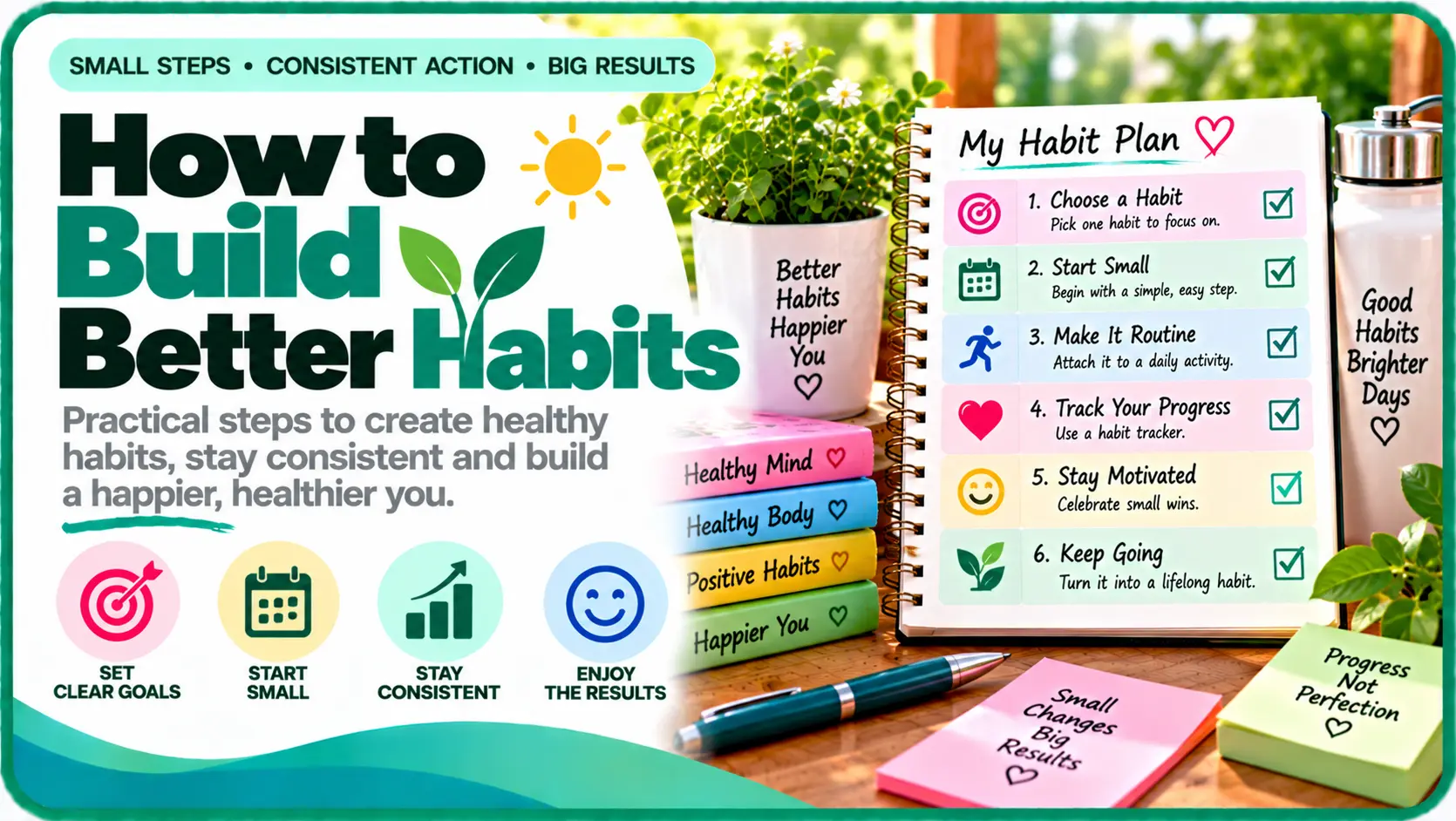
Key takeaways
- Forget “21 days.” Research suggests new health habits typically take around two months or longer to become automatic, and it varies a lot from person to person.
- Habits stick best when they’re simple, chosen by you, and done at the same time and place each day.
- Use an “after… I will…” plan to link each new habit to something you already do.
- Missing one day doesn’t undo your progress. Getting back to it the next day is what counts.
How long it really takes to build a habit
You’ve probably heard that it takes 21 days to form a habit. The research doesn’t support that.
In a well-known study from University College London, volunteers chose a daily behavior, such as drinking a bottle of water with lunch or going for a run before dinner, and tracked how automatic it felt each day. On average, it took 66 days for the new behavior to become automatic.
A larger 2024 review of 20 studies, involving 2,601 people and habits like exercise, healthy eating and drinking water, found a typical (median) time of 59 to 66 days. But individual times ranged from just 4 days to nearly a year. The authors concluded that two to five months is a realistic expectation for most health habits.
So if a new habit still feels like effort after three weeks, nothing has gone wrong. You’re right on schedule.
What makes habits stick
The 2024 review also looked at what helped habits form faster and more strongly. Several patterns stood out:
- Consistency: doing the behavior in a stable setting, at the same time and place, made a big difference.
- Choosing it yourself: habits people picked themselves tended to be stronger than ones assigned to them.
- Mornings: habits practiced in the morning generally showed greater strength.
- Simplicity: simpler, repetitive behaviors with clear cues formed more readily than complex ones.
- Enjoyment and planning: liking the activity, and planning exactly when and how to do it, both helped.
The seven steps below are built around these findings.
A 7-step method for better habits
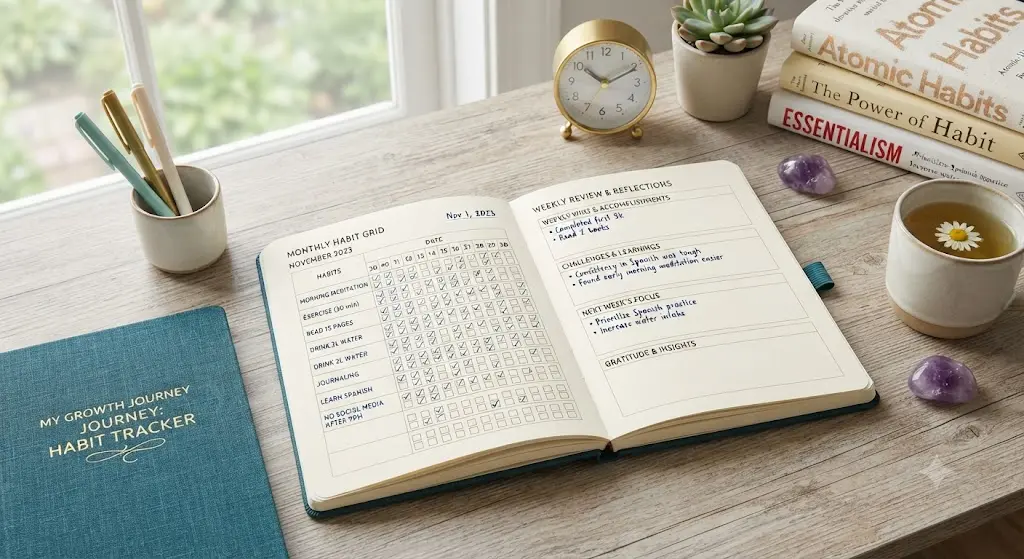
1. Choose one habit you actually want
Start with a single habit that matters to you, not one you feel you “should” do. Self-chosen habits stick better. If you’re not sure where to start, the free Wellness Scorecard highlights the everyday area with the most room to improve.
2. Make it small and specific
“Exercise more” is a wish. “Walk for 10 minutes after lunch” is a habit. Make it so small that you could do it on your busiest day. You can always do more, but the minimum should never feel like a struggle.
3. Attach it to a cue you already have
Link the new habit to something you already do every day, using a simple plan:
After I [existing routine], I will [new habit].
After I pour my morning tea, I will drink a glass of water.
After I finish lunch, I will walk for 10 minutes.
After I get into bed, I will put my phone on the other side of the room.
The existing routine becomes your reminder. This is how the habit gets that consistent time and place the research points to.
4. Set up your surroundings
Make the habit the easy option. Put the water bottle on your desk, leave walking shoes by the door, keep fruit on the counter, charge your phone outside the bedroom. Small changes to your environment do a lot of the work for you.
5. Track it
Ticking a box each day gives you a small sense of progress and shows patterns, such as which days you tend to skip. It also gives you an honest picture of how you’re doing.
Track up to five habits for free. Our Habit Tracker shows your weekly progress and streaks, saves on your device and prints on one page.
Open the Habit Tracker →6. Plan for missed days
You will miss a day eventually. The UCL study found that missing one opportunity did not significantly affect habit formation. The people who struggled were those who missed often. So use a simple rule: never miss twice in a row. If you miss Monday, make Tuesday non-negotiable, even if you only do the smallest version.
7. Review, then add the next habit
After two or three weeks, check in. Is the habit getting easier? Does it need a better cue or a smaller starting point? Once it feels fairly automatic, which may take a couple of months, add a second habit using the same steps. Building one at a time is slower on paper but far more likely to last.
Examples of small habits to start with
| Goal | Small habit | Cue |
|---|---|---|
| Drink more water | One glass of water | After waking up |
| Move more | 10-minute walk | After lunch |
| Sleep better | Screens off 30 minutes before bed | After brushing teeth at night |
| Eat more vegetables | Add one vegetable to dinner | When starting to cook |
| Feel calmer | Five slow breaths | Before opening email |
| Stay connected | Message one friend | During the evening tea break |
Many of these fit naturally into a morning and evening routine. Our guide on how to build a simple daily wellness routine shows how to put them together.
Common mistakes to avoid
- Starting too many habits at once. Pick one, or two at most. A long list spreads your effort too thin.
- Making the first version too big. An hour at the gym is hard to repeat daily; a 10-minute walk isn’t.
- Relying on motivation. Motivation comes and goes. A clear cue and an easy setup keep you going when it doesn’t.
- Giving up after a bad week. Habits take months, not days. One bad week is a small part of that.
- Changing the time every day. A habit done at a different time each day has no consistent cue, which makes it harder to stick.
Common questions
How long does it take to form a habit?
Usually around two months, but it varies widely. A UCL study found an average of 66 days, and a 2024 review of 20 studies found a typical time of 59 to 66 days, with individual times ranging from 4 days to nearly a year.
Is the 21-day rule true?
No. The research doesn’t support a 21-day rule. Most health habits take longer, and two to five months is a more realistic expectation.
Does missing a day reset my progress?
No. In the UCL study, missing a single day did not significantly affect how the habit formed. Try not to miss two days in a row, and pick it back up as soon as you can.
How many habits should I work on at once?
One is best, two at most. Once a habit feels mostly automatic, add the next one.
What’s the best time of day for a new habit?
Whatever time you can repeat consistently. The 2024 review did find that morning habits tended to be stronger, so mornings are a good place to start if your schedule allows.
Sources
- UCL News: How long does it take to form a habit?
- Singh, Murphy, Maher & Smith (2024): Time to Form a Habit, a systematic review and meta-analysis of health behaviour habit formation and its determinants. Healthcare, 12(23), 2488
Related tools
This guide is for general education and is not medical advice. See our Health Disclaimer and Editorial Policy.