Self-Care Planner
Plan one or two small things for yourself each day this week, from a short walk to calling a friend, and tick them off as you go. Your plan is saved on this device.
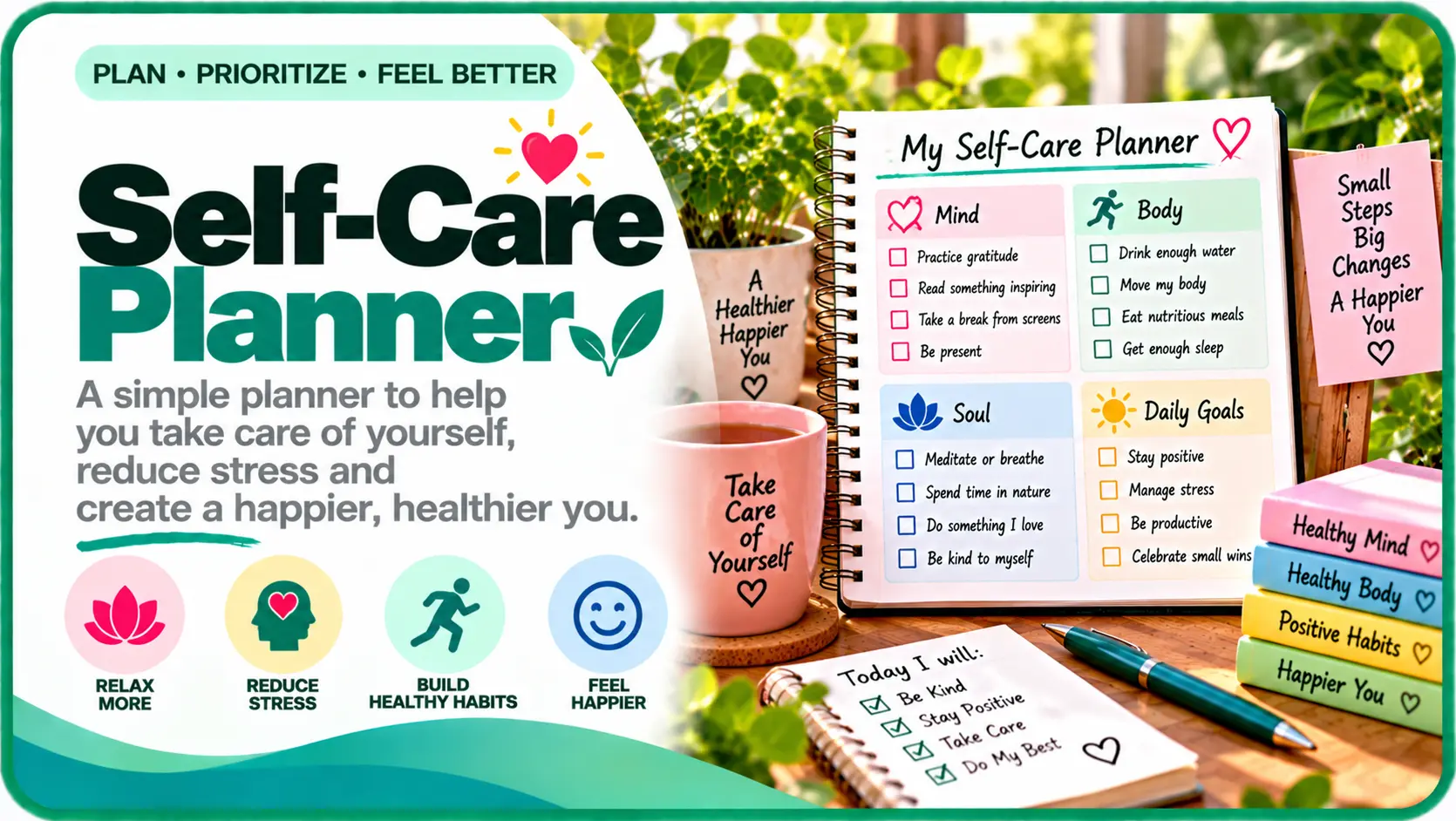
Plan your week of self-care
This week’s balance (done / planned)
What is self-care?
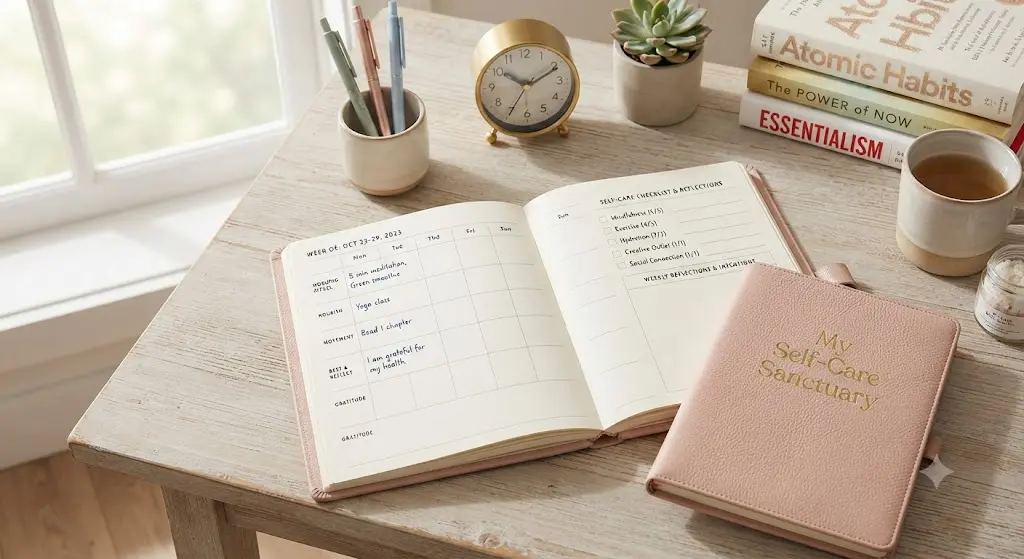
The U.S. National Institute of Mental Health (NIMH) describes self-care as taking the time to do things that help you live well and improve both your physical and mental health. It doesn’t have to be expensive or time-consuming. Small, regular acts count.
Ideas, by type
NIMH’s self-care suggestions include regular exercise, eating balanced meals and drinking enough water, keeping a steady sleep schedule, relaxing activities, setting priorities, practicing gratitude and staying connected with others. This planner groups ideas the same way:
- Move: a short walk, stretching, dancing to a few songs. NIMH notes that just 30 minutes of walking a day can boost your mood.
- Rest: an earlier night, a screen-free hour, a short nap.
- Calm the mind: slow breathing, a few minutes of quiet, writing down three things you’re grateful for.
- Connect: call a friend, share a meal, visit family. The CDC notes that strong social connections help people manage stress and are linked with better health.
- Enjoy: a hobby, music, time in nature, reading for fun.
- Nourish: cook a proper meal, keep a water bottle nearby, plan the week’s food.
Making it stick
- Pick activities that take 5 to 30 minutes, so busy days don’t derail you.
- Aim for a mix of types across the week, not perfection every day.
- Put your activity at a fixed point in the day, like after lunch or before bed.
- Use the Habit Tracker for any activity you want to do daily.
Self-care helps, but it isn’t a replacement for professional care. NIMH advises seeking help if you’ve had distressing symptoms for two weeks or more, such as trouble sleeping, changes in appetite, difficulty concentrating or losing interest in things you usually enjoy. Your doctor is a good place to start.
If you’re in crisis, contact your local emergency number or a crisis line: in the U.S., call or text 988; in India, call Tele-MANAS on 14416.