Simple Self-Care Ideas for Busy Days
Self-care doesn’t need a free afternoon or a spa budget. On a packed day, a few minutes of breathing, a short walk or a quick call to a friend can make a real difference. Here are realistic ideas sorted by how much time you actually have.
Key takeaways
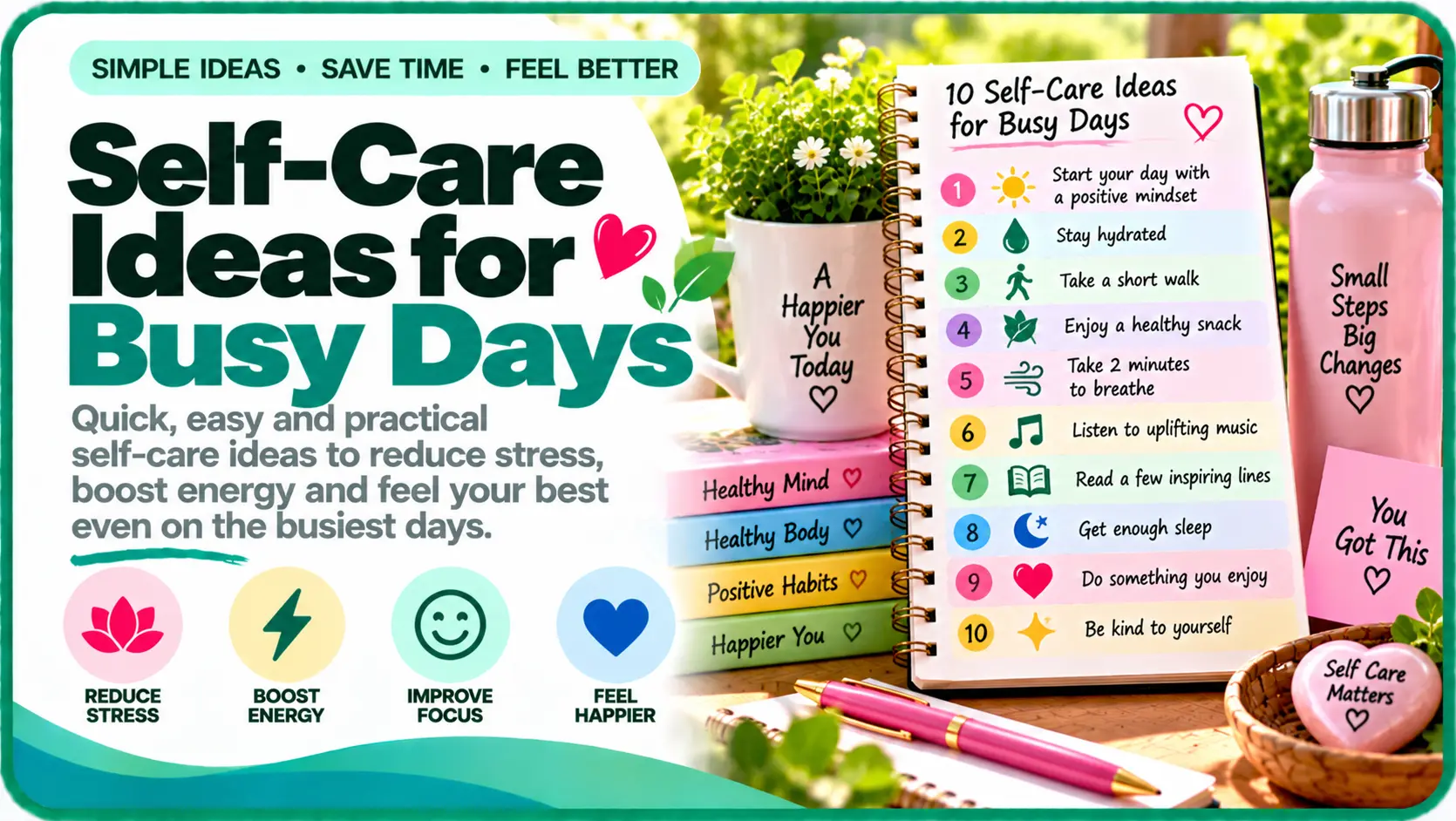
- Self-care means doing things that help you live well, physically and mentally. Small, regular acts count.
- Have a short list of 1-, 5-, 15- and 30-minute ideas ready, so you can pick one whatever the day looks like.
- Aim for a mix across the week: movement, rest, calm, connection, enjoyment and good food.
- Self-care helps, but it doesn’t replace professional care if you’ve been struggling for two weeks or more.
What self-care really means
The U.S. National Institute of Mental Health (NIMH) describes self-care as taking the time to do things that help you live well and improve both your physical health and mental health. Its suggestions are refreshingly ordinary: regular exercise, balanced meals and enough water, a steady sleep schedule, relaxing activities, setting priorities, practicing gratitude and staying connected with people.
In other words, self-care is mostly small, everyday maintenance. That’s good news when you’re busy, because small things fit into small gaps.
To keep things balanced, it helps to think of self-care in six types:
| Type | What it looks like |
|---|---|
| Move | Walking, stretching, dancing to a song |
| Rest | A proper break, an earlier night, a screen-free hour |
| Calm the mind | Slow breathing, a few quiet minutes, writing things down |
| Connect | A call, a message, a shared meal |
| Enjoy | Music, reading, a hobby, time outdoors |
| Nourish | A real meal, water, fruit or vegetables |
If you have 1 minute
- Take five slow breaths. Breathe in through your nose, then out slowly through your mouth. NIMH lists breathing exercises among relaxing activities that can help.
- Drink a glass of water. An easy reset, especially if you’ve been running on tea or coffee.
- Stand up and stretch. Roll your shoulders and reach your arms overhead.
- Look out of a window. Give your eyes a break from the screen.
- Name one thing that went well today. A tiny gratitude habit.
If you have 5 minutes
- Send a message to someone you care about. According to the CDC, strong social connections can help people manage stress and are linked with better health.
- Write down three things you’re grateful for. NIMH suggests writing them down rather than just thinking them.
- Make tomorrow’s to-do list. Pick your top three tasks so they stop circling in your head. NIMH includes setting priorities among its self-care tips.
- Listen to one favorite song without doing anything else.
- Step outside for some fresh air and daylight.
If you have 15 minutes
- Go for a brisk walk. The NHS says even a brisk 10-minute daily walk has health benefits. Brisk means you can still talk but couldn’t sing.
- Call a friend or family member instead of just texting.
- Read a few pages of something you enjoy, not something for work.
- Prepare a healthy snack or tomorrow’s lunch. Future you will be grateful.
- Do some gentle stretching or a short beginner yoga routine.
If you have 30 minutes
- Take a longer walk, ideally somewhere green. NIMH notes that just 30 minutes of walking every day can boost your mood and improve your health.
- Cook a proper meal instead of grabbing something quick.
- Spend time on a hobby: gardening, drawing, music, a puzzle.
- Share a meal with family or friends, phones away.
- Start your wind-down early. Switch off screens, tidy up and get to bed a little sooner.
Self-care during a working day
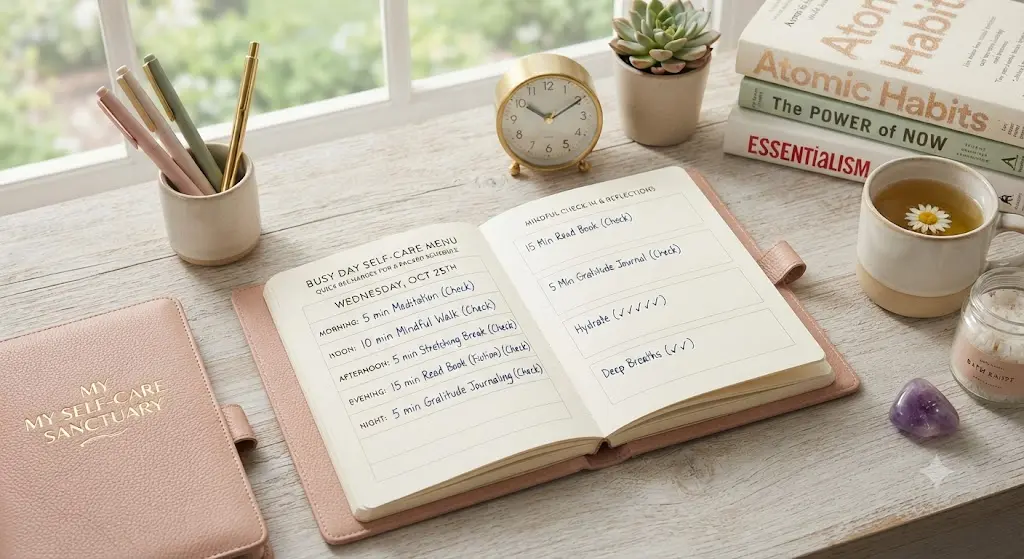
Much of a busy day happens at a desk or on the move, so it helps to have a few ideas that fit around work:
- Take your lunch break away from the screen, even for 15 minutes.
- Keep a water bottle within reach and refill it each time you get up.
- Walk while you take phone calls that don’t need a screen.
- Pause between tasks for three slow breaths before starting the next one.
- Finish the day with a short “shutdown”: write tomorrow’s top three tasks, then close the laptop. It makes the switch to your own time much clearer.
How to fit self-care into a full week
Plan it like an appointment
Self-care is the first thing to slip when you’re busy, because there’s always something more urgent. Putting it in your week ahead of time, even just “walk after lunch on Tuesday,” makes it much more likely to happen.
Plan your week of self-care. Our free Self-Care Planner suggests a balanced week in one click, lets you tick things off, and prints on a single page.
Open the Self-Care Planner →Attach it to something you already do
The easiest self-care happens at fixed points in the day: three slow breaths before you open your laptop, a walk after lunch, a gratitude note before bed. Linking a new habit to an existing one means you don’t have to remember it.
Aim for a mix, not perfection
You don’t need to cover all six types every day. Across a week, try to include some movement, some rest, something calming, some time with people and something you enjoy. If one area keeps getting skipped, give it a slot next week.
Say no when you need to
NIMH’s advice includes learning to say no to new tasks when you’re feeling overwhelmed. Protecting a little time for yourself is part of looking after your health, not a luxury.
Check in with yourself
Every few weeks, take stock of your everyday basics. The free Wellness Scorecard asks eight quick questions about sleep, water, movement, food, screens, downtime and connection, and suggests one small area to work on.
When self-care isn’t enough. NIMH advises seeking professional help if you’ve had severe or distressing symptoms for two weeks or more, such as difficulty sleeping, changes in appetite, trouble concentrating, or losing interest in things you usually enjoy. Your doctor is a good place to start.
If you’re in crisis or thinking about harming yourself, contact your local emergency number or a crisis line right away: in the U.S., call or text 988; in India, call Tele-MANAS on 14416.
Common questions
What counts as self-care?
Anything that helps you live well physically and mentally: moving your body, resting, eating well, drinking enough water, relaxing, spending time with people and doing things you enjoy. It doesn’t have to cost money or take long.
How can I practice self-care when I have no time?
Keep a short list of one- and five-minute ideas, like slow breathing, a glass of water, a stretch or a quick message to a friend, and tie one to something you already do each day, such as finishing lunch.
Is self-care selfish?
No. Looking after your basic physical and mental health makes it easier to handle work, family and everything else. Small, regular acts of self-care are part of staying well.
When should I get professional help instead?
If distressing symptoms like poor sleep, appetite changes, trouble concentrating or loss of interest last two weeks or more, talk to a doctor or mental health professional. In a crisis, contact emergency services or a crisis line straight away.
Sources
Related tools
This guide is for general education and is not medical advice. See our Health Disclaimer and Editorial Policy.