How to Start a Walking Habit (and Stick With It)
Walking is one of the easiest ways to get more active: it’s free, needs no special equipment and fits into almost any day. Here’s how much to aim for, how to start gently, and a simple four-week plan to make it a habit.
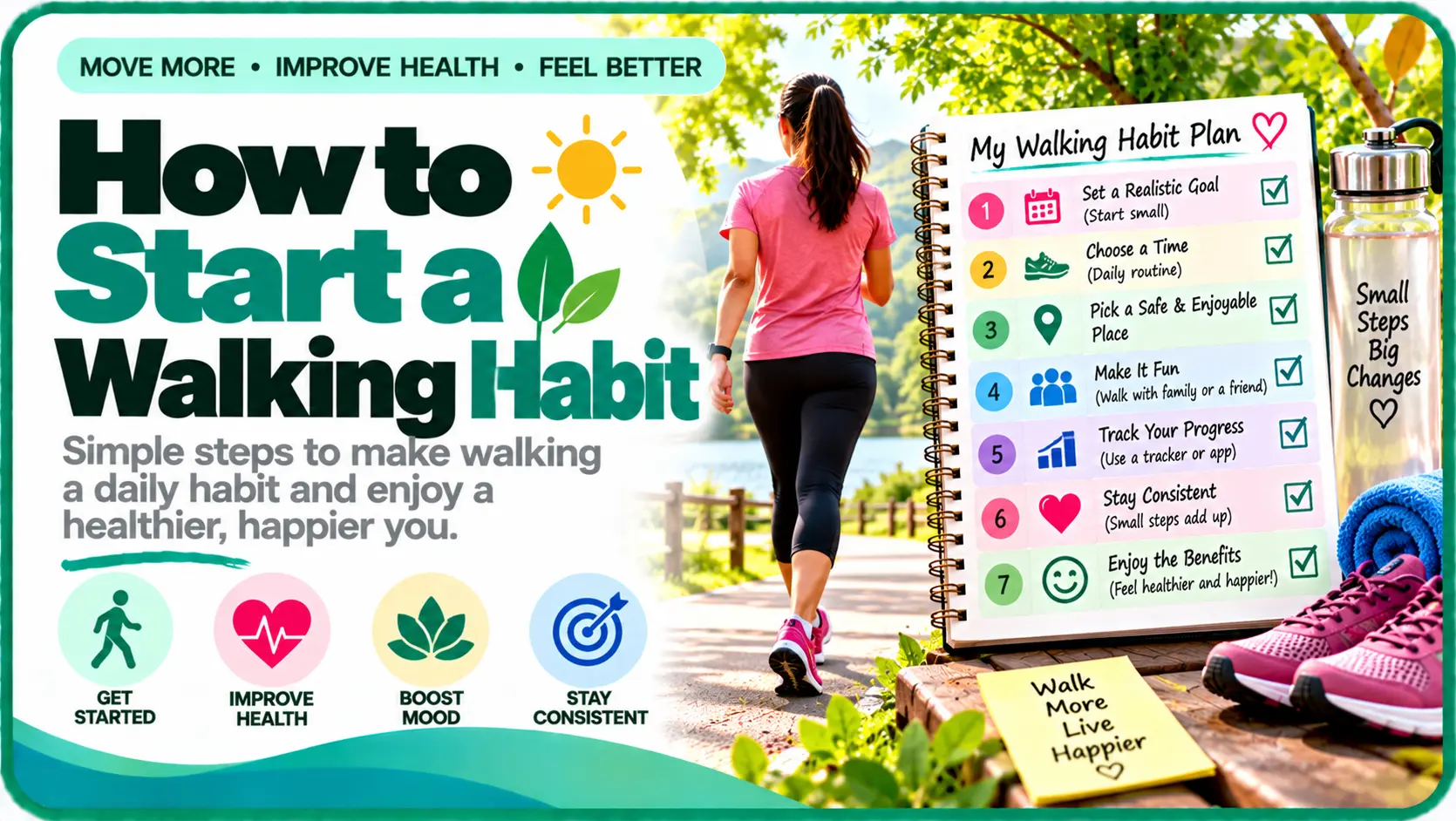
Key takeaways
- The CDC recommends 150 minutes of moderate activity a week for adults. Brisk walking counts.
- Brisk means about 3 miles an hour: you can talk, but you couldn’t sing.
- Short walks add up. A 10-minute walk is a great place to start.
- Build up over a few weeks, and link your walk to a fixed point in your day.
How much walking is enough?
The CDC recommends that adults get at least 150 minutes of moderate-intensity activity a week, and lists brisk walking as an example. That’s 30 minutes a day, five days a week. You don’t have to do it all at once: the CDC says it’s fine to break it into smaller chunks. The CDC also recommends muscle-strengthening activities at least two days a week, which walking alone doesn’t cover.
If 150 minutes sounds like a lot, start smaller. The NHS says a brisk 10-minute daily walk has lots of health benefits and counts toward your weekly total. And the CDC is clear that some physical activity is better than none.
Walking can help how you feel, too. The U.S. National Institute of Mental Health notes that just 30 minutes of walking every day can boost your mood and improve your health.
What counts as a brisk walk
A stroll around the shops is good for you, but a brisk walk counts as moderate activity. According to the NHS, a brisk walk is about 3 miles an hour (roughly 5 km/h), faster than a stroll. The easy test: you can still talk, but you can’t sing the words to a song.
If you’re new to walking, don’t worry about pace at first. Start at a comfortable speed and pick it up as you get fitter.
A 4-week plan for beginners
This plan builds gradually from 10 minutes to the CDC’s 150 minutes a week. Walk five days a week, and repeat a week if it feels too hard. There’s no rush.
| Week | Each walk | Days | Weekly total | Pace |
|---|---|---|---|---|
| 1 | 10 minutes | 5 | 50 minutes | Comfortable |
| 2 | 15 minutes | 5 | 75 minutes | Comfortable, with some brisk stretches |
| 3 | 20 minutes | 5 | 100 minutes | Mostly brisk |
| 4 | 30 minutes (or 3 × 10) | 5 | 150 minutes | Brisk |
By the end of week four, you’ll be meeting the CDC’s weekly guideline. From there, you can keep it steady, add a sixth day, or try longer weekend walks.
Track your walks for free. Our Walking Goal Tracker lets you set a goal in minutes or steps, log each walk, and see your week against the 150-minute guideline.
Open the Walking Goal Tracker →How to make walking a habit
Give it a fixed time
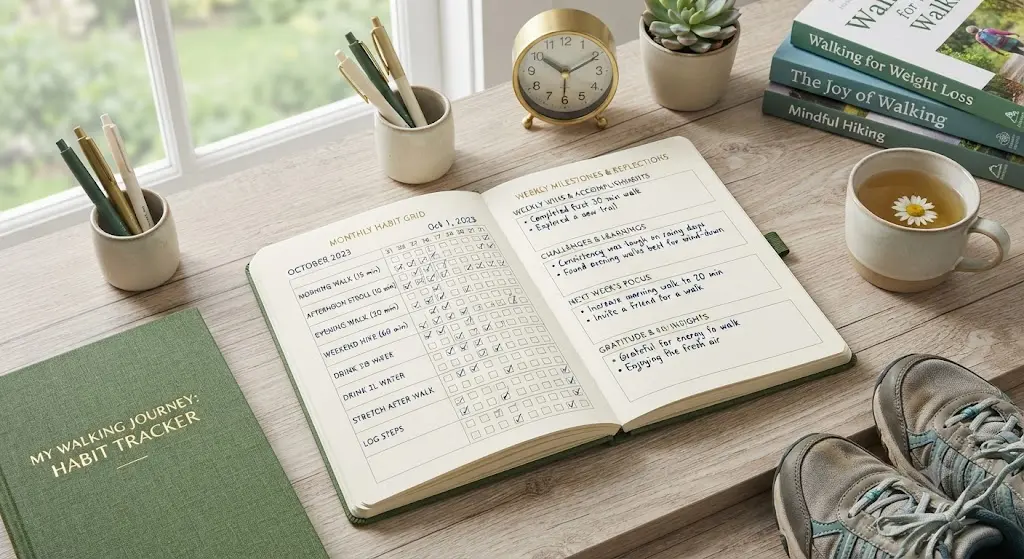
Walks that happen “when I get a chance” rarely happen. Link your walk to something you already do every day: after breakfast, after lunch, or after dinner. A consistent time is one of the strongest predictors that a new habit will stick, according to a 2024 review of habit research.
Fit it into your day
- Walk part of the way to work, or get off the bus a stop early.
- Take phone calls on foot.
- Walk to nearby shops instead of driving.
- Take a 10-minute walk after lunch instead of staying at your desk.
Keep it interesting
The NHS suggests listening to music or podcasts, trying different routes, and joining a local walking group. Walking with a friend or family member also makes you more likely to turn up, and it’s good company too.
Track your progress
Logging your walks shows you how far you’ve come and makes it obvious when you’ve slipped. You can track minutes or steps. There’s no official daily step target, so if you prefer steps, start with what you do now and raise it a little each week.
Expect a few months, not a few days
New habits take time. Research suggests a typical time of around two months for a new health habit to feel automatic, and missing a single day doesn’t undo your progress. Read more in our guide on how to build better habits.
Make it a little harder as you get fitter
Once 30 minutes feels easy, keep making progress with small changes rather than big jumps:
- Pick up the pace for a few minutes at a time, then ease off.
- Add a hill or some stairs to your usual route.
- Make one walk a week longer, such as a weekend walk in a park.
- Add a sixth walking day once five feel routine.
What you need
Very little. The NHS says any shoes or trainers that are comfortable, give adequate support and don’t cause blisters will do. For longer walks, take water and, depending on the weather, sun protection or a waterproof layer. If walking becomes a regular thing, you may want proper walking shoes.
Starting safely
Walking is safe for most people, but start gently and build up slowly. Check with a doctor first if you have a heart condition, joint problems, diabetes or another health condition, or if you haven’t been active for a long time.
Stop and get medical advice if you feel chest pain, severe breathlessness, dizziness or pain that doesn’t settle while walking. Call your local emergency number if chest pain is severe or doesn’t go away with rest.
Common questions
How long should I walk each day?
Aim for about 30 minutes a day, five days a week, to meet the CDC’s guideline of 150 minutes a week. If you’re starting out, 10 minutes a day is a great beginning, and short walks add up.
Do short walks count?
Yes. The CDC says activity can be broken into smaller chunks, and the NHS says a brisk 10-minute daily walk counts toward your weekly total.
How fast is a brisk walk?
About 3 miles (roughly 5 km) an hour. A simple test from the NHS: you can still talk, but you can’t sing.
How many steps a day should I walk?
There’s no official daily step target. The main guidelines are written in minutes: 150 minutes of moderate activity a week. If you track steps, start from your usual count and increase it gradually.
What’s the best time of day to walk?
Whenever you can do it consistently. Linking your walk to the same point in your day, like after lunch, makes it far more likely to become a habit.
Sources
- CDC: Physical activity guidelines for adults
- NHS: Walking for health
- NIMH: Caring for Your Mental Health
- Singh et al. (2024): Time to Form a Habit, a systematic review and meta-analysis. Healthcare, 12(23), 2488
Related tools and guides
This guide is for general education and is not medical advice. See our Health Disclaimer and Editorial Policy.