Simple Morning Routine Ideas (15, 30 and 60 Minutes)

A good morning routine doesn’t mean waking at 5 a.m. It’s a few small steps, done in the same order each day, that help you feel awake and ready. Here are simple routines for 15, 30 and 60 minutes, plus a list of ideas to build your own.
Key takeaways
- Start with a steady wake-up time. It’s the anchor for the rest of your day.
- Three basics help most mornings: a glass of water, daylight and a little movement.
- Morning is a good time for new habits; research suggests morning habits tend to be stronger.
- Pick a routine that fits your busiest morning, not your ideal one.
Why mornings are a good time for habits
Mornings tend to be more predictable than the rest of the day: you wake up, get up, get ready. That makes them a natural place to attach new habits. A 2024 review of 20 habit studies found that habits practiced in the morning generally showed greater strength than habits practiced later in the day.
A short routine also gets a few healthy basics done before the day gets busy, so they don’t depend on willpower in the evening.
Three basics for any morning
1. A glass of water
The NHS suggests 6 to 8 glasses of fluid a day. Having the first one as soon as you wake up is an easy start. Leave a glass by the sink or your bed the night before.
2. Daylight
Open the curtains, step outside, or have breakfast near a window. The Sleep Foundation notes that natural light in the morning helps keep your internal clock in sync, which supports a steady sleep schedule.
3. A little movement
A few minutes of stretching, a short walk, or a quick set of simple exercises. The CDC recommends 150 minutes of moderate activity a week, and says it can be split into short chunks. A 10-minute morning walk counts.
Sample routines: 15, 30 and 60 minutes
The 15-minute routine (busy mornings)
| Minutes | Step |
|---|---|
| 0–2 | Drink a glass of water; open the curtains |
| 2–7 | Stretch: neck, shoulders, back and legs |
| 7–12 | Get ready: wash and dress |
| 12–15 | Write your top 3 tasks for the day |
The 30-minute routine
| Minutes | Step |
|---|---|
| 0–5 | Water, curtains open, make the bed |
| 5–15 | A short walk outside or 10 minutes of stretching |
| 15–25 | Breakfast with fruit or vegetables |
| 25–30 | Plan your top 3 tasks |
The 60-minute routine (unhurried mornings)
| Minutes | Step |
|---|---|
| 0–5 | Water and daylight |
| 5–30 | Brisk walk, yoga or exercise |
| 30–45 | Shower and get dressed |
| 45–55 | Unhurried breakfast, no screens |
| 55–60 | Write 3 things you’re grateful for and your top 3 tasks |
Build and print your own routine. Our free Daily Routine Planner turns your wake-up time and chosen steps into a timed, printable schedule.
Open the Daily Routine Planner →More ideas to choose from
- Make your bed: a small, quick win to start the day.
- Eat breakfast: the NHS recommends not skipping it, and suggests one that’s high in fibre and low in fat, sugar and salt.
- A few minutes of quiet: slow breathing, prayer or simply sitting with your tea before checking your phone.
- Write down 3 good things: a quick gratitude habit.
- Prepare your lunch or fill your water bottle for the day.
- Check the day’s plan before opening email or social media.
Morning routines for real life
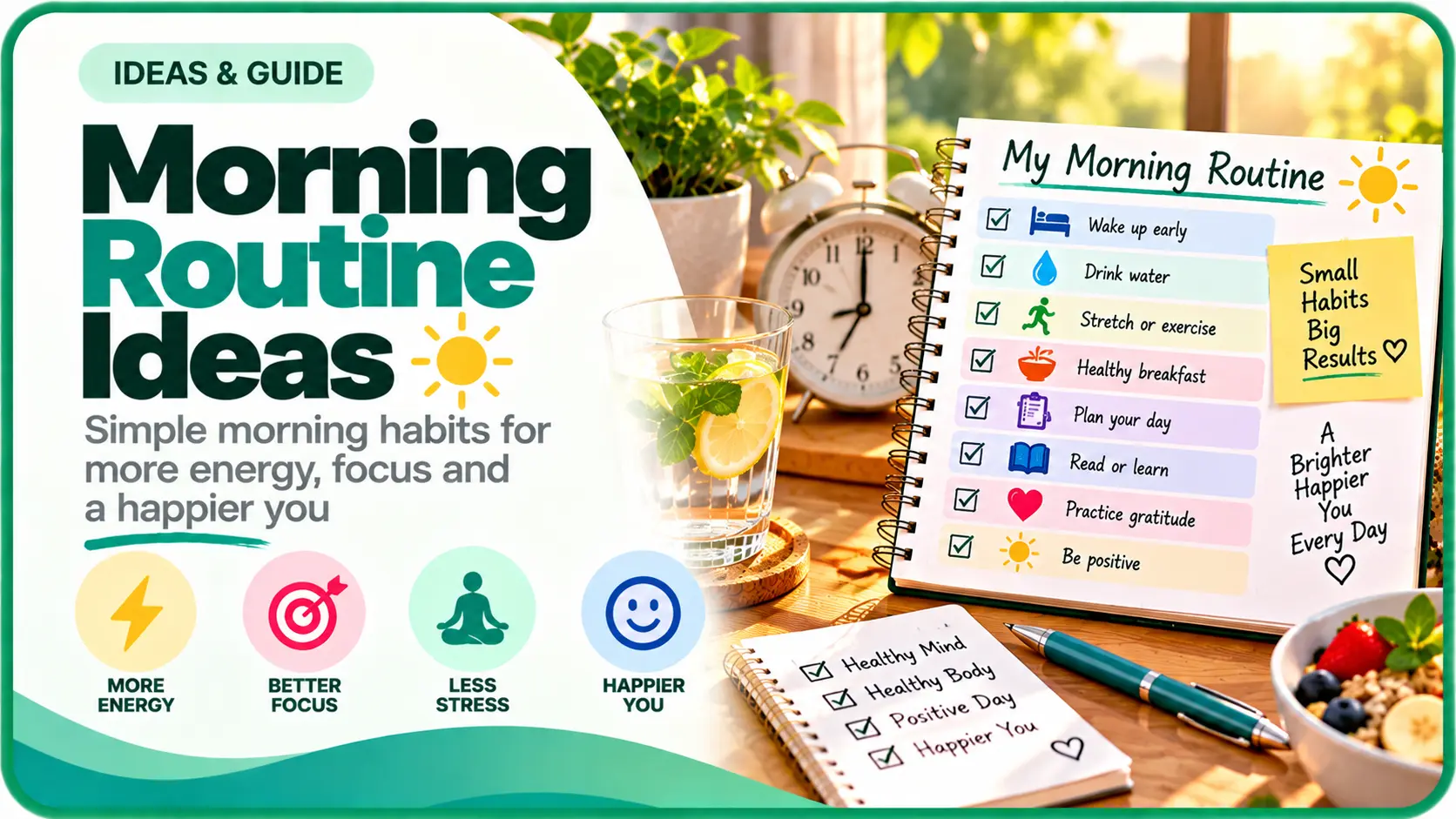
Most routine advice assumes a quiet house and a 9-to-5 job. Here’s how to adapt it.
If you have young children
Get up 10 to 15 minutes before them if you can, just long enough for water, daylight and a moment of quiet. If that’s not possible, involve them: open the curtains together, stretch together, or take a short walk on the school run. Prepare breakfast items and school bags the night before.
If you work shifts
Your “morning” is whenever you wake up. Keep the same steps in the same order (water, light, movement, food) even if the clock time changes. When you can, keep your wake-up time steady on consecutive shifts, and get bright light when you start your “day.”
If you work from home
Without a commute, it’s easy to roll straight from bed to laptop. Create a small “start of day” ritual instead: dress for the day, take a 10-minute walk outside as a pretend commute, then sit down to work. It gives you movement, daylight and a clear start.
If you’re not a morning person
Keep the routine very short, maybe just water and opening the curtains, and do the rest later in the day. Focus on getting enough sleep first; mornings feel much easier after 7 or more hours.
Making it stick
- Keep your wake-up time steady, including weekends. The CDC recommends the same wake-up and bedtime every day.
- Protect your sleep. A morning routine starts the night before. Most adults need at least 7 hours.
- Prepare the night before: water glass out, clothes chosen, walking shoes by the door.
- Phone last, not first. Try finishing your routine before checking messages.
- Start smaller than you think. The 15-minute routine done every day beats the 60-minute one done once a week.
- Track it for a few weeks in the Habit Tracker.
Common questions
What is a good morning routine?
One you can repeat every day. For most people that means a steady wake-up time, a glass of water, some daylight, a little movement, breakfast and a quick plan for the day.
How long should a morning routine be?
As long as fits your busiest morning. Fifteen minutes is plenty to start; you can add more on slower days.
Do I need to wake up early to have a morning routine?
No. What matters is waking at a consistent time and getting enough sleep. The CDC recommends at least 7 hours for adults.
Should I check my phone first thing in the morning?
Many people find it easier to finish a short routine first, so the day starts with their own priorities rather than messages and news.
Sources
- Singh et al. (2024): Time to Form a Habit, a systematic review and meta-analysis. Healthcare, 12(23), 2488
- NHS: Water, drinks and your health
- NHS: 8 tips for healthy eating
- Sleep Foundation: How to reset your sleep routine
- CDC: Physical activity guidelines for adults
- CDC: About Sleep
Related tools and guides
This guide is for general education and is not medical advice. See our Health Disclaimer and Editorial Policy.