An Evening Wind-Down Routine for Better Sleep

A wind-down routine is the last 30 to 60 minutes before bed, spent the same calm way each night. It tells your body the day is ending and makes falling asleep easier. Here’s what to include, what to avoid, and a simple routine you can start tonight.
Key takeaways
- Give yourself 30 to 60 minutes to wind down before lights out.
- Switch off screens at least 30 minutes before bed (the CDC); the NHS suggests relaxing for at least an hour.
- Keep your bedroom dark, quiet, comfortable and cool.
- Avoid caffeine, alcohol, large meals and hard exercise close to bedtime.
Why a wind-down routine helps
It’s hard to go straight from emails, chores or a busy TV show to sleep. A regular wind-down gives your mind and body time to slow down, and doing it in the same order each night turns it into a cue that sleep is coming.
Health bodies agree on the basics. The CDC recommends a consistent bedtime and turning off electronic devices at least 30 minutes before bed. The NHS suggests relaxing for at least an hour before bed, for example by taking a bath or reading.
A simple 60-minute wind-down
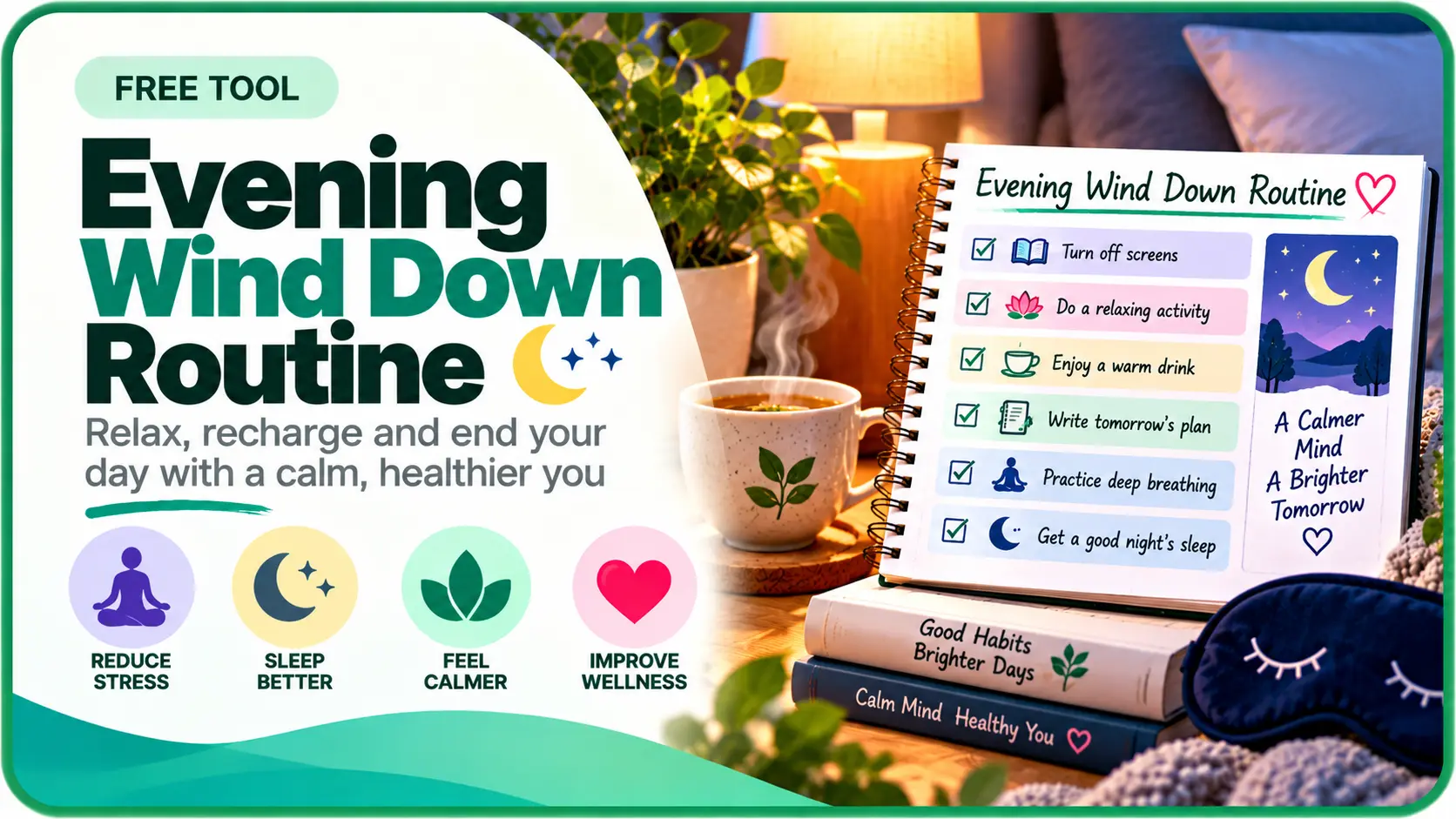
This example assumes lights out at 10:30 p.m. Shift the times to fit your own bedtime.
| Time | Step |
|---|---|
| 9:30 p.m. | Finish chores; set out tomorrow’s clothes and bag; dim the lights |
| 9:45 p.m. | Write tomorrow’s top 3 tasks, so they’re out of your head |
| 10:00 p.m. | Screens off; phone on charge outside the bedroom |
| 10:00 p.m. | Warm shower or bath, then brush teeth |
| 10:15 p.m. | Read a paper book, stretch gently or listen to calm music |
| 10:30 p.m. | Lights out |
Short on time? A 30-minute version works too: screens off, brush teeth, read for 15 minutes, lights out.
Not sure when your bedtime should be? Our free Sleep Planner suggests times based on your wake-up time and age, and prints a wind-down routine for you.
Open the Sleep Planner →Calming things to do
- Read something enjoyable on paper, not work emails.
- Take a warm bath or shower, one of the NHS’s suggestions.
- Gentle stretching for your neck, shoulders and back.
- Slow breathing: breathe in through your nose, then out slowly. NIMH lists breathing exercises among relaxing self-care activities.
- Write things down: tomorrow’s to-do list, or a few lines about your day, so you’re not going over them in bed.
- Listen to calm music or an audiobook at low volume.
- Prepare for tomorrow: lunch packed, clothes out, keys by the door.
If your mind won’t switch off
Lying in bed going over tomorrow’s to-do list or today’s worries is one of the most common reasons people struggle to fall asleep. A few things can help:
- Do a “brain dump” earlier in the evening. Write down everything on your mind, including tasks, worries and ideas, so it’s on paper rather than in your head.
- Write tomorrow’s top three tasks. Knowing the plan makes it easier to let go of it.
- Try slow breathing in bed. Breathe in gently through your nose, then breathe out more slowly than you breathed in. Repeat for a few minutes.
- Get up if you can’t sleep. Rather than lying awake for a long time, go to another room and do something calm in dim light until you feel sleepy. The NHS suggests only going to bed when you feel sleepy.
Winding down in real life
If you work late
Even 15 minutes helps. Close the laptop, write a quick list for tomorrow, then do two calming steps, such as a shower and a few pages of a book, before lights out.
If you have young children
Their bedtime routine can become yours too: dim lights, quiet voices, a story. Once they’re asleep, keep the house calm rather than switching on bright lights and screens.
If you share a bedroom
Agree on “screens off” and “lights out” times together. An eye mask and earplugs help if your schedules differ.
What to avoid before bed
| Avoid | Guidance |
|---|---|
| Screens in bed | The NHS says the light from phones and other devices before bed makes you more awake. The CDC suggests devices off at least 30 minutes before bed. |
| Caffeine | The NHS suggests no tea or coffee in the 6 hours before bed; the CDC advises limiting caffeine in the afternoon and evening. |
| Alcohol and large meals | The CDC recommends avoiding both before bedtime. |
| Hard exercise late at night | The NHS suggests not exercising in the 4 hours before bed; earlier in the day, exercise helps sleep. |
| Lying awake for ages | The NHS advises only going to bed when you feel sleepy. |
Set up your bedroom
- Dark: curtains, blinds or an eye mask.
- Quiet: earplugs if needed.
- Cool: the CDC recommends a cool temperature.
- Comfortable: the NHS mentions a comfortable mattress, pillows and bedding.
- For sleep: keep work and screens out of the bedroom where you can.
When to see a doctor: the NHS advises talking to a doctor if changing your habits hasn’t helped, if you’ve had trouble sleeping for months, or if poor sleep is making it hard to cope. Loud snoring, gasping in your sleep or heavy daytime sleepiness are also worth getting checked.
Common questions
How long before bed should I start winding down?
About 30 to 60 minutes. The CDC suggests switching off devices at least 30 minutes before bed, and the NHS suggests relaxing for at least an hour.
Is it bad to use my phone in bed?
The NHS says the light from phones and similar devices right before bed makes you more awake. Charging your phone outside the bedroom is an easy fix.
When should I stop drinking tea or coffee?
The NHS suggests avoiding tea and coffee in the 6 hours before bed. If you go to bed at 10:30 p.m., that means your last cup by about 4:30 p.m.
What if I still can’t fall asleep?
Keep your wake-up time fixed and only go to bed when you feel sleepy. If sleep problems continue for months or affect your daily life, talk to a doctor.
Sources
Related tools and guides
This guide is for general education and is not medical advice. See our Health Disclaimer and Editorial Policy.