Weekly Meal Planning for Beginners
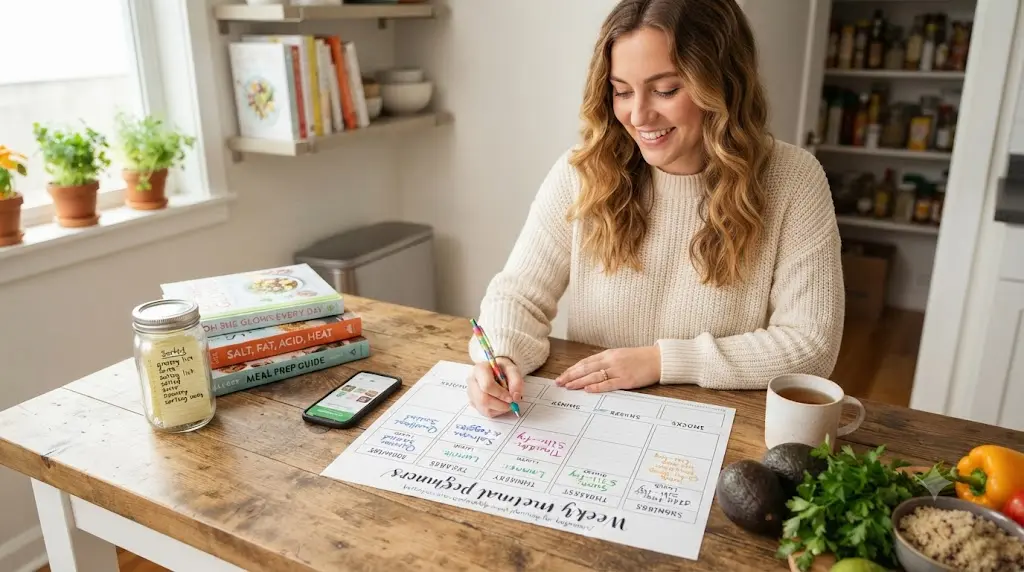
Meal planning simply means deciding this week’s meals before the week starts, then shopping once for everything you need. It saves time, money and the nightly “what’s for dinner?” question. Here’s a simple six-step method that takes about 20 minutes a week.
Key takeaways
- Start by planning dinners only, then add lunches and breakfasts once that feels easy.
- Use the “balanced plate” as a guide: half vegetables and fruit, a quarter whole grains, a quarter protein.
- Build your grocery list as you plan, and check what you already have first.
- Plan for leftovers, and store them safely: refrigerate within 2 hours and eat within 3 to 4 days.
Why plan your meals?
- Fewer daily decisions. You already know what’s for dinner when you get home tired.
- One shopping trip. Fewer extra trips, and fewer forgotten ingredients.
- Less food waste. You buy what you’ll actually cook.
- Better balance. Seeing the whole week makes it easy to spot days with no vegetables, or three takeaways in a row.
How to meal plan in 6 steps
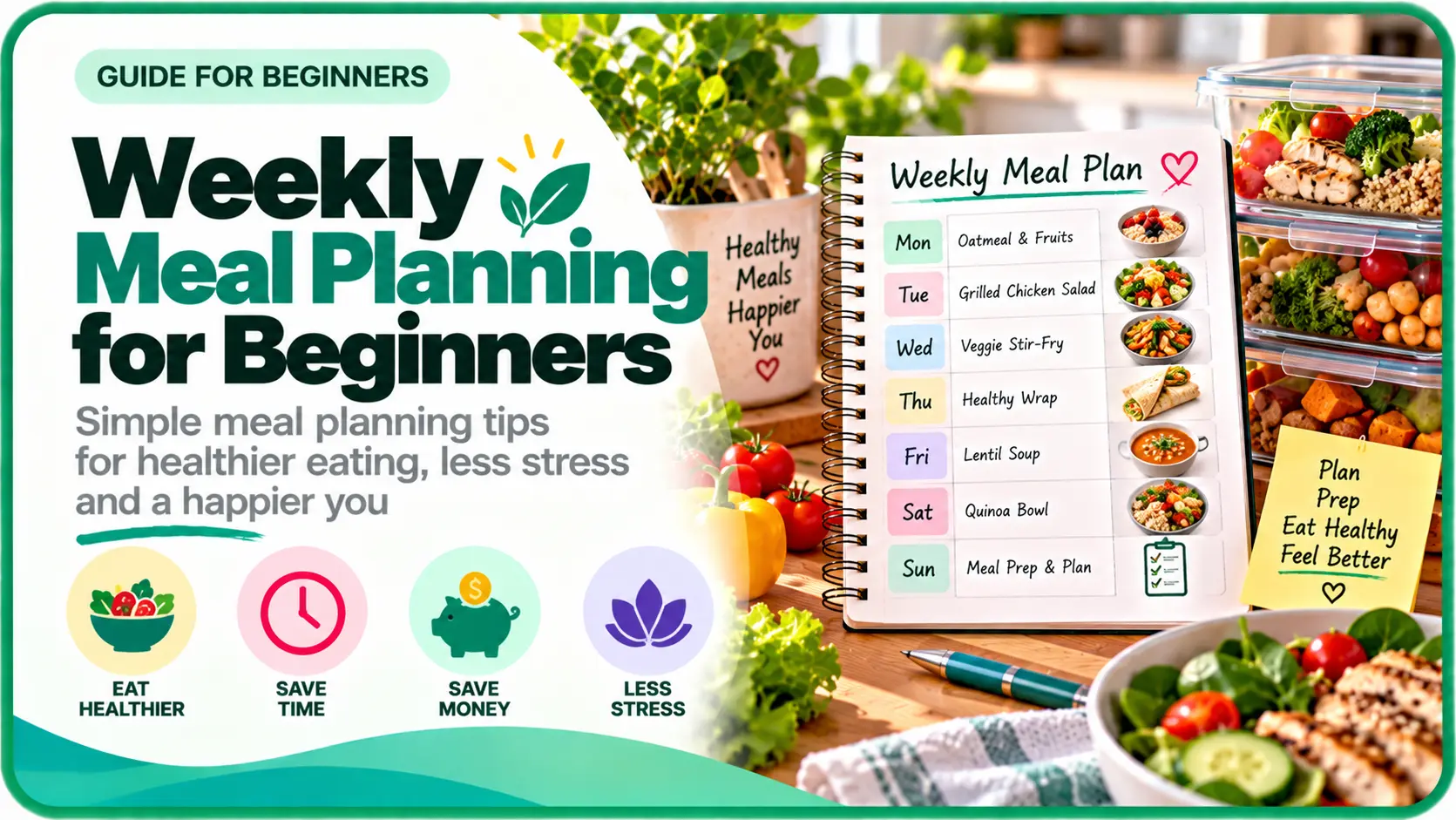
1. Check your week
Look at the week ahead. Which evenings are busy? Are you eating out anywhere? Busy nights need quick meals or leftovers; free evenings are for cooking something bigger.
2. Check what you already have
Look in the fridge, freezer and cupboards first. Planning meals around food you already have is the easiest way to cut waste and save money.
3. Choose your meals, starting with dinners
If you’re new to meal planning, plan dinners only for the first couple of weeks. Pick meals you already know and enjoy. Repeating favorites is completely fine. Once dinners feel easy, add lunches, then breakfasts.
4. Balance each meal
Harvard’s Healthy Eating Plate is a simple guide for any meal:
- Half your plate: vegetables and fruit
- A quarter: whole grains, such as brown rice, whole-wheat roti or bread, oats or quinoa
- A quarter: healthy protein, such as dal, beans, eggs, fish, chicken, tofu or paneer
The NHS also recommends at least 5 portions of fruit and vegetables a day and at least two portions of fish a week, one of them oily. Glance across your plan and add vegetables wherever a meal looks light on them.
5. Write the grocery list as you go
As you add each meal, write down the ingredients you don’t already have. Group them by section (vegetables and fruit, grains, protein, dairy, pantry) so shopping is quick.
Plan your week in minutes. Our free Meal Planner has a 7-day grid, one-click meal ideas and a grocery list sorted by category. Print both on one page.
Open the Meal Planner →6. Do a little prep
Twenty or thirty minutes after shopping makes the week much easier: wash and chop vegetables, cook a pot of rice or dal, or portion out snacks. Even small prep means quicker meals on busy nights.
An example week
Here’s a simple dinner plan that uses “cook once, eat twice” to save time. Swap in meals your family enjoys.
| Day | Dinner | Note |
|---|---|---|
| Monday | Dal, brown rice and a big salad | Cook extra dal |
| Tuesday | Vegetable stir-fry with tofu or chicken | Quick, about 20 minutes |
| Wednesday | Leftover dal with roti and sautéed spinach | Leftovers night |
| Thursday | Baked fish, potatoes and green beans | One oily-fish portion |
| Friday | Whole-wheat pasta with tomato and vegetables | Make a double batch of sauce |
| Saturday | Vegetable khichdi with yogurt | Easy, one-pot |
| Sunday | Bean chili with rice | Freeze extra portions |
Leftovers and food safety
Leftovers are a meal planner’s best friend, as long as they’re handled safely. The U.S. Department of Agriculture (USDA) advises:
- Refrigerate within 2 hours of cooking.
- Divide large amounts into shallow containers so they cool quickly.
- Eat refrigerated leftovers within 3 to 4 days, or freeze them. Frozen leftovers keep their best quality for 3 to 4 months.
- Reheat until steaming hot, to 165°F (74°C) if you’re using a food thermometer.
A simple habit: label containers with the day you cooked them.
Tips that make it easier
- Pick a planning day. Same day each week, such as Saturday morning before shopping.
- Keep a list of “go-to” meals. After a few weeks, you’ll have 10 to 15 favorites to rotate.
- Theme your nights, such as Monday dal, Friday pasta, Sunday something new. It speeds up choosing.
- Plan one “backup” meal from the freezer or pantry for evenings when plans change.
- Plan snacks too. Fruit, yogurt, nuts or roasted chana stop you reaching for less healthy options.
- Drink water with meals. The NHS suggests keeping fruit juice to one small glass (150 ml) a day.
Meal planning on a budget
- Build meals around low-cost staples: dal, beans, chickpeas, eggs, oats, rice and seasonal vegetables.
- Buy what’s in season, and use frozen vegetables, which are just as useful and don’t go off.
- Use one ingredient in several meals, such as spinach in dal on Monday and pasta on Friday, so nothing gets wasted.
- Cook in batches and freeze portions for busy days.
- Shop with your list and stick to it. That’s where most of the savings come from.
- Check your fridge before shopping and plan a “use it up” meal for leftovers and odds and ends.
Special diets: if you have diabetes, food allergies, kidney disease or another condition that affects what you eat, plan your meals with your doctor or a registered dietitian.
Common questions
How do I start meal planning as a beginner?
Plan dinners only for one week. Check what food you already have, pick five to seven meals you know, write a grocery list as you go, and shop once. Add lunches and breakfasts once dinners feel easy.
How long does meal planning take?
Usually about 20 minutes a week once you have a list of go-to meals, plus your shopping trip and any optional prep.
How long do leftovers last in the fridge?
The USDA says leftovers can be kept in the refrigerator for 3 to 4 days. Refrigerate them within 2 hours of cooking, and freeze anything you won’t eat in that time.
What makes a balanced meal?
A simple guide is Harvard’s Healthy Eating Plate: half vegetables and fruit, a quarter whole grains and a quarter healthy protein, with water to drink.
Sources
- Harvard T.H. Chan School of Public Health: Healthy Eating Plate
- NHS: 8 tips for healthy eating
- NHS: Water, drinks and your health
- USDA: Leftovers and food safety
Related tools and guides
This guide is for general education and is not medical advice. See our Health Disclaimer and Editorial Policy.