How to Build a Consistent Sleep Schedule
The simplest way to sleep better is to go to bed and wake up at the same time every day, weekends included. Here’s how to choose the right times, shift your schedule gradually, and set up the habits that help it stick.
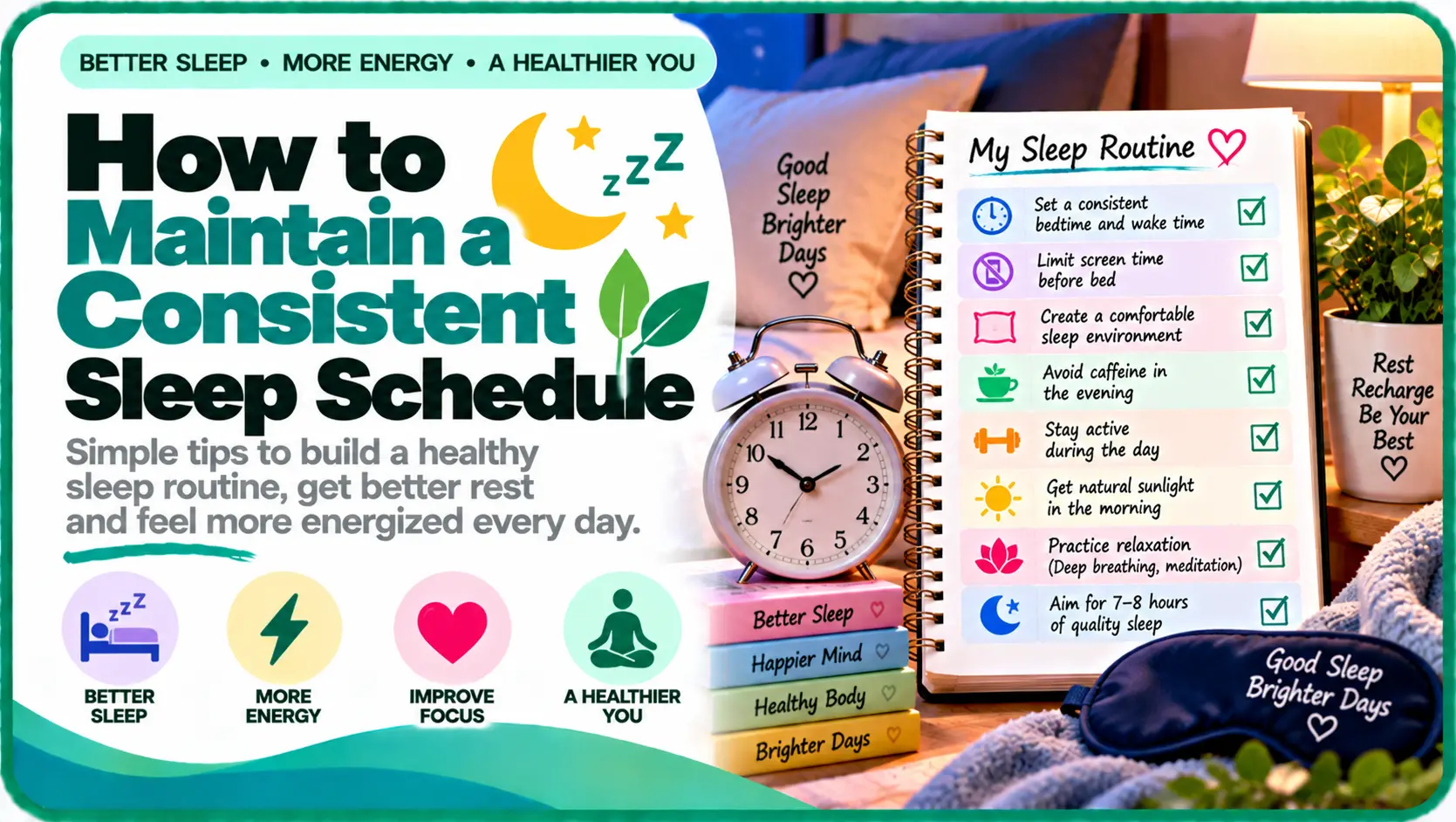
Key takeaways
- Most adults need at least 7 hours of sleep. Start by fixing your wake-up time, then count back to a bedtime.
- Shift your schedule gradually, by 15 to 30 minutes every few days, rather than all at once.
- Get daylight in the morning and dim the screens in the evening.
- Keep the same times on weekends. That consistency is what resets your body clock.
Why a consistent schedule matters
Your body runs on an internal clock that works best when it gets regular signals: waking at a similar time, daylight in the morning, darkness in the evening. When your bedtime and wake-up time move around a lot, that clock gets out of sync, which can make it harder to fall asleep at night and harder to wake up in the morning.
That’s why the first tip from the CDC for better sleep is simply to go to bed and get up at the same time every day, including on weekends.
How much sleep you need
The CDC recommends these amounts for adults:
| Age | Recommended sleep |
|---|---|
| 18 to 60 years | 7 or more hours a night |
| 61 to 64 years | 7 to 9 hours |
| 65 years and older | 7 to 8 hours |
Teenagers aged 13 to 17 need more: 8 to 10 hours a night.
7 steps to a consistent sleep schedule
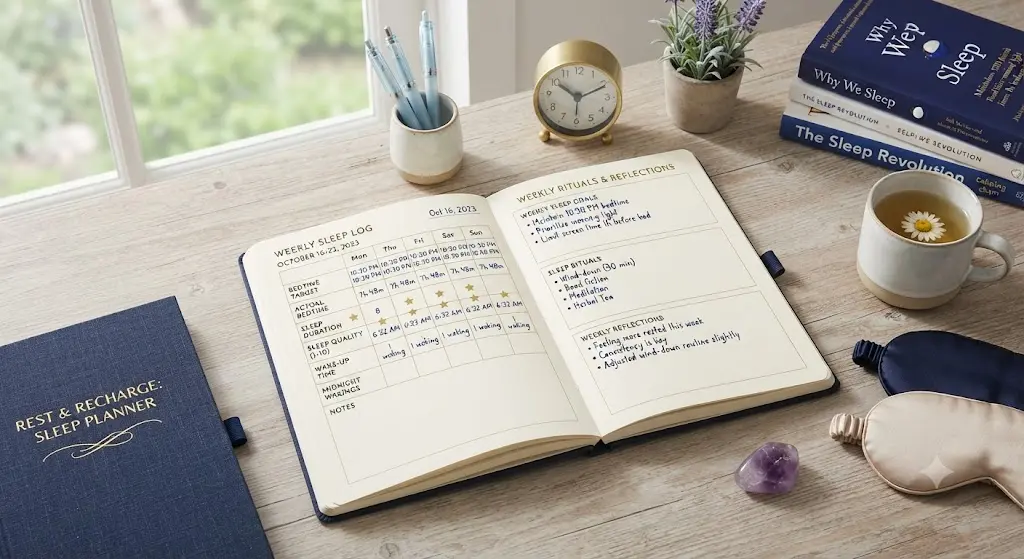
1. Fix your wake-up time first
Your wake-up time is easier to control than the moment you fall asleep, so make it your anchor. Choose a time you can keep every day, including weekends, based on your earliest regular commitment.
2. Count back to a bedtime
Count back at least 7 hours from your wake-up time, plus a little time to fall asleep. If you like, you can also work in sleep cycles. According to the Sleep Foundation, each cycle lasts about 90 minutes on average, and most people go through four to six a night. Some people find that timing their alarm to the end of a cycle helps them wake up feeling less groggy, but cycles vary, so treat this as a rough guide.
Let the planner do the maths. Our free Sleep Planner suggests bedtimes in 90-minute cycles, checks them against the recommended hours for your age, and creates a printable wind-down routine.
Open the Sleep Planner →3. Shift gradually
If your new times are very different from your current ones, don’t jump straight there. The Sleep Foundation suggests adjusting in 15- or 30-minute steps over a series of days. For example, if you want to wake at 6:30 instead of 7:30, try 7:15 for a few days, then 7:00, and so on.
4. Get daylight in the morning
The Sleep Foundation notes that natural light in the morning helps keep your internal clock in sync. Open the curtains as soon as you get up, have breakfast by a window, or take a short walk outside.
5. Build a short wind-down routine
A regular routine before bed signals that the day is ending. The CDC recommends turning off electronic devices at least 30 minutes before bed, and the NHS suggests relaxing for at least an hour before bed, for example by having a bath or reading. Keep it simple and repeatable: dim the lights, put your phone away, read or stretch, then lights out.
6. Set up your bedroom for sleep
The CDC recommends a bedroom that is quiet, relaxing and at a cool temperature. The NHS adds that it should be dark (curtains, blinds or an eye mask help) and that your mattress, pillows and bedding should be comfortable.
7. Keep it up on weekends
This is the step most people skip. A long weekend lie-in can undo a week of progress, because your body clock shifts later and Monday morning feels like jet lag. Try to keep your weekend wake-up time within an hour of your weekday one.
Things that throw your schedule off
| Habit | What the guidance says |
|---|---|
| Caffeine late in the day | The CDC advises limiting caffeine in the afternoon and evening; the NHS suggests avoiding tea and coffee for at least 6 hours before bed. |
| Alcohol and large meals | The CDC recommends avoiding large meals and alcohol before bedtime. |
| Screens in bed | The NHS says the light from phones and other devices before bed makes you more awake. |
| Long or late naps | The Sleep Foundation suggests keeping naps under 30 minutes and early in the afternoon. If you struggle to sleep at night, the NHS advises skipping daytime naps. |
| Exercising too late | Regular exercise helps sleep, but the NHS suggests avoiding it in the 4 hours before bed. |
When to talk to a doctor
The NHS advises seeing a doctor if changing your sleep habits hasn’t helped, if you’ve had trouble sleeping for months, or if poor sleep is making it hard to cope with daily life. It’s also worth getting checked if you snore loudly, stop breathing or gasp during sleep, or feel very sleepy during the day despite getting enough hours in bed.
Common questions
How long does it take to fix a sleep schedule?
If you shift your times by 15 to 30 minutes every few days, as the Sleep Foundation suggests, a change of an hour or two can take one to two weeks. Keeping the new times every day, including weekends, is what makes it stick.
Should I wake up at the same time on weekends?
Yes, as closely as you can. The CDC recommends going to bed and getting up at the same time every day, including weekends. Try to stay within an hour of your weekday wake-up time.
Is it better to fix my bedtime or my wake-up time?
Start with your wake-up time. You can control when your alarm goes off, but not exactly when you fall asleep. A steady wake-up time, plus morning daylight, helps your body feel sleepy at a regular time at night.
What if I can’t fall asleep at my new bedtime?
Don’t lie there for hours. The NHS suggests only going to bed when you feel sleepy. Keep your wake-up time fixed, and your body will gradually get sleepy earlier.
Are 90-minute sleep cycles exact?
No. The Sleep Foundation says cycles average about 90 minutes, but the first one can be shorter and later ones longer. Use cycles as a rough guide; consistency matters more.
Sources
- CDC: About Sleep
- Sleep Foundation: How to reset your sleep routine
- Sleep Foundation: Stages of Sleep
- NHS: Insomnia
Related tools and guides
This guide is for general education and is not medical advice. See our Health Disclaimer and Editorial Policy.