Healthy Grocery List for Beginners
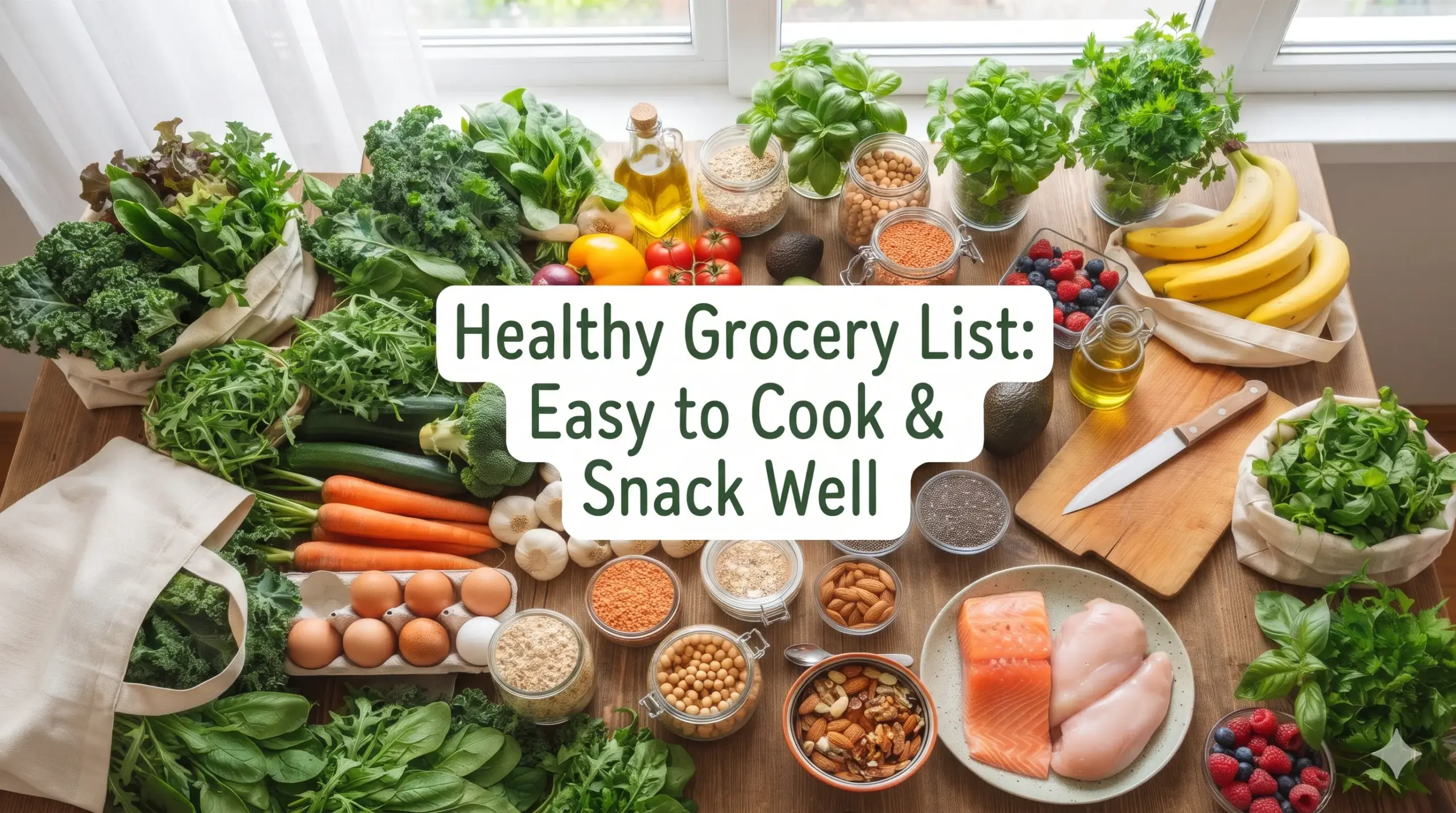
Healthy eating starts in the shop. If good food is in your kitchen, it’s much easier to cook and snack well. Here’s a simple, flexible healthy grocery list organized by store section, plus how to plan, read labels and keep costs down.
Key takeaways
- Plan your meals first, then write your list from the plan.
- Fill your cart mostly with vegetables, fruit, whole grains, beans and other proteins.
- Frozen, canned and dried foods are healthy, cheap and last longer.
- Use the label’s % Daily Value: 5% or less is low, 20% or more is high.
Before you shop
- Plan your meals. Decide on five or so dinners for the week, and a few easy breakfasts and lunches. Our guide to weekly meal planning for beginners shows how in 20 minutes.
- Check what you have. Look in the fridge, freezer and cupboards, and plan meals that use up what’s already there.
- Write your list from the plan. Group it by store section so you can shop quickly. MyPlate suggests including both staples and perishables.
- Don’t shop hungry. It’s much harder to stick to your list.
Free Weekly Meal Planner, no sign-up. Plan the week’s meals and build your grocery list as you go, then print both on one page.
Open the Meal Planner →The healthy grocery list
You don’t need everything here. Pick what fits your meal plan, your budget and the foods you enjoy.
🥦 Vegetables
- Leafy greens: spinach, lettuce, kale or cabbage
- Carrots, peppers, cucumbers and tomatoes
- Broccoli, cauliflower or green beans
- Onions and garlic
- Sweet potatoes or squash
🍎 Fruit
- Easy everyday fruit: apples, bananas, oranges or pears
- Seasonal fruit, which is often cheaper and tastier
- Lemons or limes, for flavor
The British Dietetic Association notes that fresh, frozen, tinned and dried fruit and vegetables all count. One portion is about 80g, such as one medium apple.
❄️ Frozen
- Frozen mixed vegetables, peas, spinach or broccoli
- Frozen berries, for breakfast and snacks
- Frozen fish fillets
🥫 Canned and dried
- Beans, chickpeas and lentils (canned or dried)
- Canned tomatoes and tomato paste
- Canned fish, such as tuna, salmon or sardines
- Vegetables or fruit canned in water or juice rather than syrup
- Low-salt stock
🌾 Grains
- Oats
- Brown rice, whole-wheat pasta or other whole grains
- Whole-grain or wholemeal bread, wraps or pitta
🍗 Protein
- Eggs
- Chicken or turkey
- Fish
- Tofu or tempeh
- Beans and lentils (also in the canned section)
🥛 Dairy and alternatives
- Milk, or an unsweetened fortified plant milk
- Plain yogurt
- Cheese, in small amounts
🥜 Healthy fats and flavor
- Olive or vegetable oil
- Unsalted nuts and seeds
- Peanut butter or another nut butter
- Herbs, spices, vinegar and mustard, to add flavor without much salt
🥤 Drinks
- Water: tap water is fine where it’s safe to drink
- Tea and coffee
- Sparkling water, if you’re swapping out sugary drinks
Want to drink more water? See how much water you should drink a day.
Printable meal planner and grocery list. $12 The Complete Wellness Planner includes reusable weekly meal planner and grocery list pages, plus planners for habits, sleep, water, walking and self-care.
See the Complete Wellness Planner →How to read food labels quickly
The U.S. Food and Drug Administration (FDA) suggests three simple checks:
- Check the serving size first. All the numbers on the label are for one serving. If you eat two servings, double them.
- Use the % Daily Value (%DV). 5% DV or less of a nutrient per serving is low; 20% DV or more is high.
- Know what to look for. Look for less saturated fat, sodium and added sugars, and more dietary fiber, vitamin D, calcium, iron and potassium.
For example, when comparing two breakfast cereals, choose the one with the lower %DV for added sugars and the higher %DV for fiber.
How to eat healthy on a budget
These tips come from MyPlate’s “Eat Healthy on a Budget” tip sheet from the U.S. Department of Agriculture:
- Plan, plan, plan. Plan meals around your budget and write a list.
- Compare unit prices. The shelf label shows the price per ounce or per unit, so you can compare brands and sizes.
- Stretch meals with beans and frozen or canned vegetables. They add fiber and nutrients and help you feel full.
- Buy in bulk, carefully. Whole grains, dried or canned beans and frozen vegetables keep well, but don’t buy more than you’ll use.
- Look for produce on sale, including frozen and canned.
- Grow herbs at home. Basil or oregano on a windowsill costs much less than buying them.
Two more tips: choose store brands, which are often cheaper for the same basic foods, and cook extra portions to eat as lunch the next day.
A sample basket for one week
Here’s an example basket for one or two people, enough for simple breakfasts, packed lunches and five dinners:
| Section | Buy | Used for |
|---|---|---|
| Vegetables | Bag of spinach, carrots, peppers, onions, broccoli | Stir-fry, omelets, salads, soup |
| Fruit | Bananas, apples, a bag of oranges | Breakfast and snacks |
| Frozen | Mixed vegetables, berries, fish fillets | Fish and vegetables, porridge topping |
| Canned and dried | 2 cans of beans, 2 cans of tomatoes, lentils | Chili, lentil soup, pasta sauce |
| Grains | Oats, brown rice, whole-wheat pasta, wholemeal bread | Porridge, stir-fry, pasta, sandwiches |
| Protein | A dozen eggs, chicken thighs | Omelets, tray-bake chicken |
| Dairy | Milk, plain yogurt | Porridge, breakfast, snacks |
| Extras | Peanut butter, unsalted nuts | Snacks, toast |
Common questions
What should be on a healthy grocery list?
Mostly vegetables, fruit, whole grains (such as oats and brown rice), beans and lentils, eggs, fish, chicken or tofu, plain yogurt or milk, nuts and healthy oils. Frozen and canned vegetables, fruit and fish are healthy options too.
Are frozen and canned vegetables healthy?
Yes. Frozen, canned and dried fruit and vegetables all count towards your daily portions. Choose vegetables canned in water and fruit canned in juice rather than syrup, and check the label for added salt and sugar.
How can I eat healthy on a tight budget?
Plan meals and shop with a list, compare unit prices, buy beans and frozen or canned vegetables, buy long-lasting staples in bulk, and look for produce on sale.
How do I know if a food is high in sugar or salt?
Look at the % Daily Value on the Nutrition Facts label. According to the FDA, 5% DV or less of a nutrient per serving is low, and 20% DV or more is high.
Sources
- MyPlate (USDA): Eat Healthy on a Budget
- FDA: How to Understand and Use the Nutrition Facts Label
- British Dietetic Association: Fruit and vegetables, how to get five-a-day
Related tools and guides
This guide is for general education and is not medical advice. If you have a medical condition or food allergy, follow the advice of your doctor or dietitian. See our Health Disclaimer and Editorial Policy.