A Simple Weekly Wellness Check-In (10 Minutes)
A weekly check-in is ten quiet minutes to look back at how your week went (sleep, water, movement, food, rest and people) and choose one small thing to improve next week. It’s the habit that keeps all your other habits on track.
Key takeaways
- Pick the same time each week, such as Sunday evening, and keep it to about ten minutes.
- Look at seven everyday areas: sleep, water, movement, food, screens, downtime and connection.
- Choose just one small change for the coming week.
- It’s a habit check, not a health test. If something has felt wrong for two weeks or more, talk to a doctor.
Why a weekly check-in helps
Busy weeks blur together. Without stopping to look back, it’s easy to sleep badly for a fortnight or skip every walk without really noticing. A short weekly check-in helps you:
- Spot patterns early, like late nights creeping in or weekends without any movement.
- Notice what’s working, so you keep doing it.
- Make one small, realistic change instead of an overwhelming list of resolutions.
It also fits the self-care advice from the U.S. National Institute of Mental Health (NIMH), which includes setting goals and priorities, and noticing what you’re grateful for.
How to do it: 4 steps
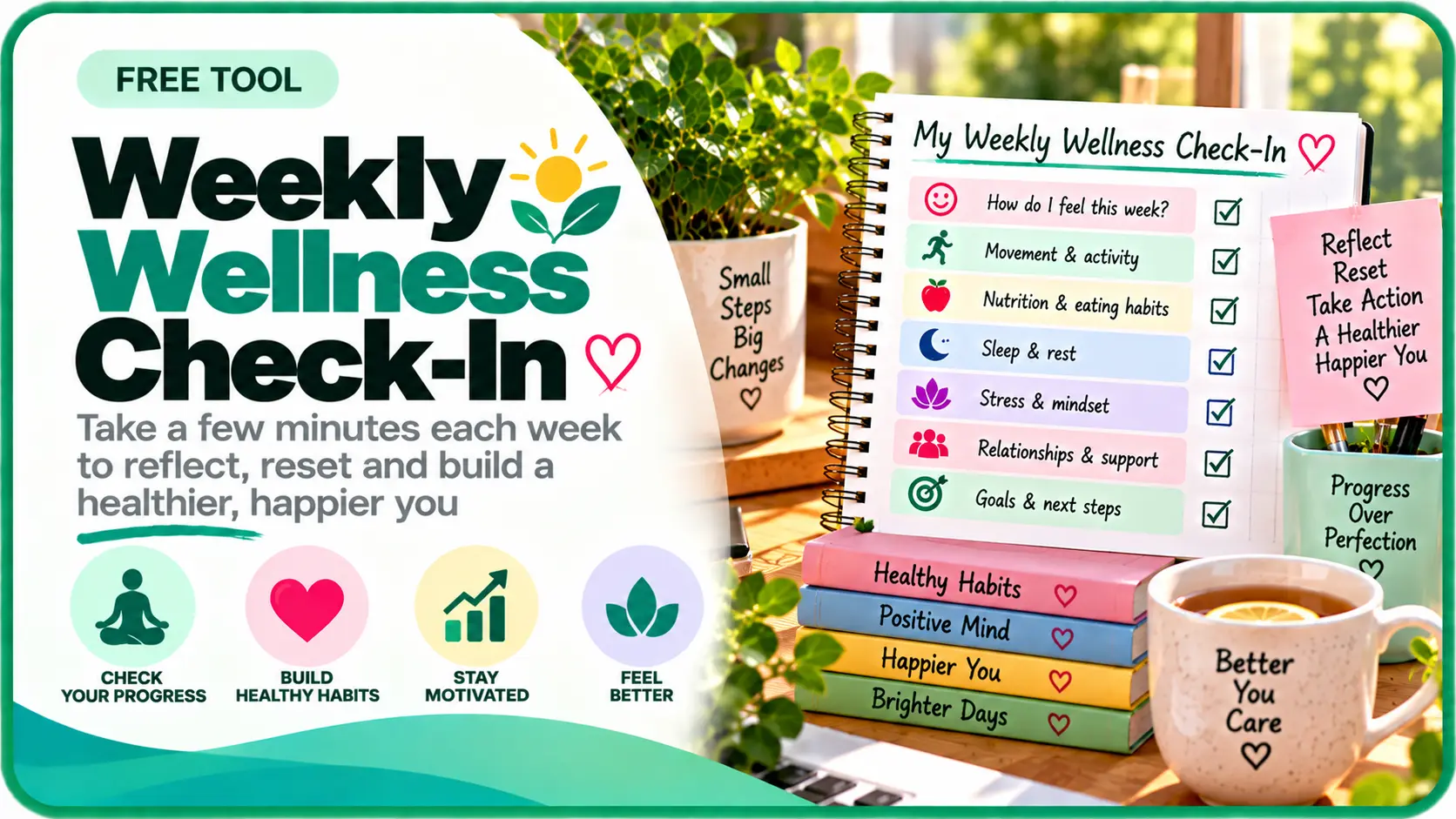
1. Pick a regular time
Sunday evening or Saturday morning works well for most people: the week is over, and the next one hasn’t started. Put it in your calendar like an appointment.
2. Look back at the week
Glance at anything you’ve tracked: your habit tracker, water or walking logs, your calendar. Then answer the questions below honestly. There are no wrong answers.
3. Note one thing that went well
Start with something positive, however small: you walked three times, you had a good night’s sleep, you called a friend. NIMH suggests writing down things you’re grateful for; this is a weekly version.
4. Choose one focus for next week
Pick the area that most needs attention and decide one small, specific action. More on that below.
Prefer a quick quiz? Our free Wellness Scorecard asks eight questions, gives you a score out of 16, highlights where to start, and remembers your last score so you can compare.
Take the Wellness Scorecard →The check-in questions
Each question is based on a widely used public health guideline.
| Area | Ask yourself | Guideline |
|---|---|---|
| Sleep | Did I get about 7 hours most nights, at similar times? | At least 7 hours for adults; same bedtime and wake time daily (CDC) |
| Water | Did I rarely feel thirsty? | 6 to 8 glasses of fluid a day (NHS) |
| Movement | Did I get around 150 minutes of brisk walking or similar? | 150 minutes of moderate activity a week (CDC) |
| Food | Did I eat fruit and vegetables most days? | At least 5 portions a day (NHS) |
| Screens | Did I switch off screens before bed? | Devices off at least 30 minutes before bed (CDC) |
| Downtime | Did I make time for something relaxing or enjoyable? | Relaxing activities are part of self-care (NIMH) |
| Connection | Did I spend time with friends or family? | Social connection helps people manage stress (CDC) |
Rate each area simply: good, okay or needs attention. That’s enough to see where you stand.
Choosing next week’s focus
Pick one area marked “needs attention,” then choose a small, specific action:
| If this needs attention… | Try this next week | Helpful tool |
|---|---|---|
| Sleep | Same wake-up time every day, weekends included | Sleep Planner |
| Water | A glass with every meal | Water Intake Tracker |
| Movement | A 10-minute walk after lunch on 5 days | Walking Goal Tracker |
| Food | Plan dinners and add a vegetable to each | Meal Planner |
| Screens | Phone charges outside the bedroom | Daily Routine Planner |
| Downtime or connection | Schedule one relaxing thing and one call | Self-Care Planner |
Next week, start your check-in by asking: did I do my one thing? If yes, keep it going and maybe pick another. If not, make it smaller and try again.
An example check-in
Here’s what a real ten-minute check-in might look like on a Sunday evening:
| Area | Rating | Note |
|---|---|---|
| Sleep | Okay | Fine on weekdays, but up late Friday and Saturday |
| Water | Good | Water bottle on desk is working |
| Movement | Needs attention | Only walked twice; rain and a busy week |
| Food | Okay | Two takeaways; vegetables most days |
| Screens | Needs attention | Phone in bed most nights |
| Downtime | Good | Read most evenings |
| Connection | Good | Dinner with family, called a friend |
Went well: drinking enough water every day.
Next week’s one thing: a 10-minute walk after lunch on five workdays, with a backup of walking indoors or taking the stairs if it rains.
Notice that screens also needed attention, but only one area was chosen. Screens can be next week’s focus.
Your own template
Copy these four lines into a notebook or your phone’s notes app each week:
1. This week went well: ________
2. Areas that need attention: ________
3. Next week’s one thing: ________
4. Did I do last week’s one thing? Yes / Partly / No
When to look for more help
A weekly check-in is about everyday habits; it isn’t a medical or mental health assessment. NIMH advises seeking help if you’ve had severe or distressing symptoms for two weeks or more, such as trouble sleeping, changes in appetite, difficulty concentrating, or losing interest in things you usually enjoy. Your doctor is a good place to start.
If you’re in crisis, contact your local emergency number or a crisis line: in the U.S., call or text 988; in India, call Tele-MANAS on 14416.
Common questions
What is a wellness check-in?
A short, regular review of your everyday habits, such as sleep, water, movement, food, screens, downtime and connection, followed by choosing one small change for the week ahead.
How long should a weekly check-in take?
About ten minutes. Keep it quick so it’s easy to repeat every week.
What’s the best day for a weekly check-in?
Any day you can keep consistent. Sunday evening is popular because the week is done and you can plan the next one.
Should I work on several areas at once?
No, pick one. A single small change you actually make is worth more than five you abandon by Wednesday.
Sources
- NIMH: Caring for Your Mental Health
- CDC: About Sleep
- CDC: Physical activity guidelines for adults
- CDC: About Social Connectedness
- NHS: Water, drinks and your health
- NHS: 8 tips for healthy eating
Related tools and guides
This guide is for general education and is not medical advice. See our Health Disclaimer and Editorial Policy.